
How to Choose the Right 4G Outdoor Security Camera
Securing a second home, a construction site, or a farm often presents a major headache: the lack of a Wi-Fi connection. A 4G outdoor security camera then emerges as the ideal solution, offering remote surveillance via the mobile network. But be warned, the market is saturated with promises that don't always hold up in the field.
As the head of buyer's guides at Joybuy, my mission is to help you see things more clearly. Before you take the plunge, it's crucial to know the three most common pitfalls that can turn a good investment into a real source of frustration.
- The myth of infinite battery life: Many cameras promise months of battery life. In reality, this duration melts away with frequent detections, live view sessions, or in very cold weather. A battery-powered outdoor camera without a solar charging option can quickly turn into a logistical nightmare.
- Hidden subscription costs: An attractively priced camera can hide mandatory monthly fees for essential features like video storage or smart detection. Without this subscription, the device loses much of its usefulness.
- SIM card complexity: The apparent simplicity of a security camera with a SIM card can hide its own set of troubles: compatibility issues with certain carriers, unexpected data consumption, or a network setup that goes sour.
Essential Criteria for Reliable 4G Surveillance
To make the right choice, focus on the features that truly matter day-to-day. Ignoring them means risking a purchase that won't meet your expectations.
1. Power and Battery Life: The Heart of the Matter
Power is the crux of the issue for your security system. A camera with a dead battery is a useless camera.
- Battery only: For moderate use with infrequent traffic. Check its capacity (in mAh); over 10,000 mAh is a solid starting point. Still, expect to recharge it manually several times a year.
- 4G solar camera: This is THE preferred solution for hassle-free autonomy. The solar panel continuously recharges the battery during the day, even on overcast days. It's a non-negotiable feature for the most remote sites, like a 4G construction site camera or for agricultural surveillance.
2. Image Quality and Detection: See Clearly Without the Spam
A good camera should allow you to clearly identify what's happening, day or night, without drowning you in a flood of false alerts.
- Resolution: 2K resolution (around 2560 x 1440 pixels) offers a much higher level of detail than Full HD (1080p). This is essential for zooming in on a face or a license plate.
- Colour night vision: While classic infrared provides only a black and white image, colour night vision uses integrated LED spotlights to illuminate the scene and capture full-colour footage. A decisive advantage for nighttime identification.
- Person detection: Basic systems are triggered by the slightest movement (rustling leaves, a passing cat). Person or vehicle detection technology, enhanced with AI, filters these out to notify you only of important events.
- 4G PTZ camera: PTZ (Pan-Tilt-Zoom) models are motorised and can rotate horizontally and vertically. They allow you to cover a much larger area than a fixed camera and to track a moving target.
Recommended 4G Camera Picks
After analysing the market based on these criteria, here is our selection. Two models that meet specific needs while avoiding the most common pitfalls.
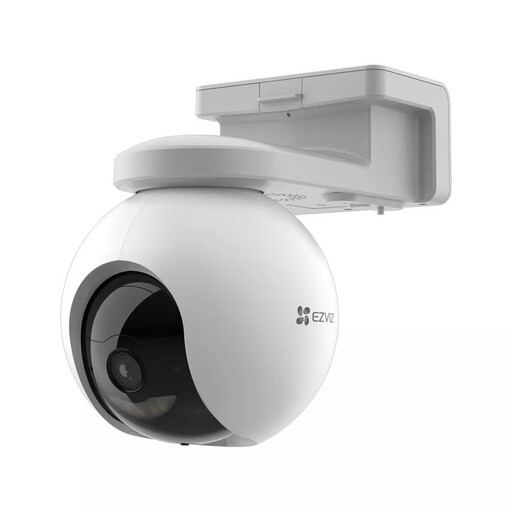
EZVIZ EB8 4G 2K Outdoor Pan & Tilt Camera
Why it stands out: Perfect for a second home or a large property. Its PTZ motorisation allows it to scan a 360° view and track a target. The result: complete coverage with a single device, where several fixed cameras would otherwise be needed.
Its 10,400 mAh battery provides a solid foundation. To ensure it never runs out of power, it's compatible with the brand's solar panel (sold separately). It also offers local storage on a microSD card (up to 256 GB), freeing you from any cloud subscription.
Motorised 360° panoramic view and smart person tracking. 2K resolution and colour night vision for flawless identification.
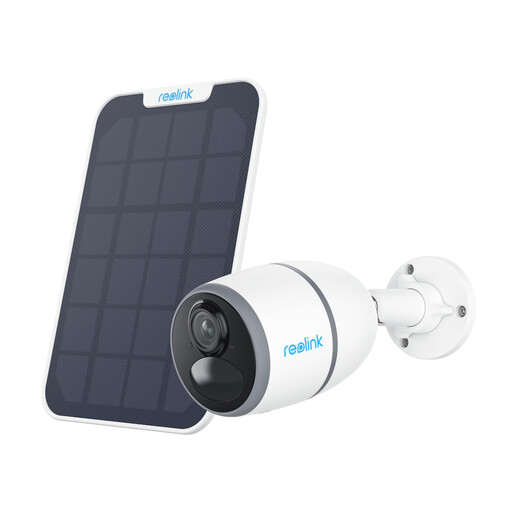
Reolink GO Series G330 4G 4MP 2K Solar Camera
Why it stands out: Designed for construction sites, farms, or remote cabins. It's the ultimate "set it and forget it" solution because it doesn't depend on any external power source. A truly 100% standalone security camera.
It tackles the battery life problem head-on by including a solar panel right in the box. Its smart detection (people/vehicles) filters out false alerts, which preserves battery life and your peace of mind. Local storage on a microSD card (up to 128 GB) is also included.
Solar panel included for perpetual autonomy. Smart detection (person/vehicle) for relevant alerts and controlled data consumption.
Need other options?
For more specific uses, such as wildlife observation in nature, other standalone solutions are available. We have compiled a complete selection of products that meet our strict specifications.
4G Cameras: Your Questions, Our Answers
What SIM card and data plan for a 4G camera?
Most 4G cameras require a SIM card (Nano or Micro format) with a mobile data plan. To start, opt for a no-contract plan with 2 to 5 GB per month. Actual consumption will depend on the frequency of detections and your live streaming sessions. Most importantly, double-check the camera's compatibility with major carriers in your region before making a purchase.
How much data does a 4G security camera use?
It can vary drastically. A live view stream in 2K can consume several megabytes per minute. In standby mode, consumption is almost zero. With well-configured smart detection that only sends short video clips for alerts, a 2 GB/month plan is often sufficient. If you plan to watch the live feed frequently, a 10 GB or larger plan will give you more peace of mind.
Does a solar-powered 4G camera work in winter?
Yes, but its efficiency will be reduced. Shorter days and weaker sunlight mean the panel will charge the battery more slowly. Extreme cold can also affect the performance of the lithium-ion battery. For winter use, it's crucial to position the solar panel to capture maximum direct sunlight and to limit the most power-hungry features if battery life becomes critical.