
Action Camera Buying Guide: Pitfalls to Avoid for the Right Choice
The action camera market is flooded with promises: 4K, stabilization, waterproofing... But behind the marketing jargon often lie costly disappointments. As the Head of Product Recommendations at Joybuy, my mission is to help you see through the noise. Before you commit, here are three common pitfalls to be aware of so your purchase doesn't become a regret.
- The low-cost "4K" mirage: Many models proudly advertise 4K resolution but are equipped with mediocre sensors. The result? A large image, yes, but one that's grainy, has dull colours, and is simply unusable in low light. No, resolution isn't everything.
- "Magic" stabilization that butchers the image: A low-end electronic image stabilization (EIS) system will simply crop aggressively into the frame, reducing the field of view and sharpness. Your mountain biking or skiing videos, which were meant to be smooth, end up blurry and distorted.
- Battery life on paper vs. real-world performance: The advertised battery life is almost always measured under lab conditions (Wi-Fi off, lower resolution, etc.). In the field, expect the battery to drain twice as fast, leaving you stranded at the worst possible moment.
Beyond the Spec Sheet: What Really Matters
To make the right choice, you need to look beyond the marketing numbers. Focus on the features that have a real impact on the quality of your memories. Here are the three essential criteria to check before you head to the checkout.
4K Resolution and Sensor Size: The Inseparable Duo
A 4K sport camera is more than just its pixel count. True image quality depends primarily on the size of its sensor. A larger sensor (e.g., 1/1.3-inch or 1-inch) captures more light. The result: sharper videos, richer colours, and much better performance when light levels drop, whether at the end of the day or in a forest. Don't be fooled by a simple "4K" logo; always check the sensor size that comes with it.
Image Stabilization: The Key to Perfectly Smooth Videos
For a motorcycle camera or any high-movement activity, good stabilization is non-negotiable. The most advanced systems, often featuring a 6-axis gyroscope, analyse and compensate for movement on all planes. They deliver stunningly fluid footage, close to what you'd get from an external gimbal, but without sacrificing image quality. Effective stabilization preserves the field of view and sharpness, even in the most extreme conditions.
Waterproofing: Native or With a Case?
The waterproofing on a waterproof camera comes in two forms. Some models are "natively" waterproof down to 5 or 10 metres, perfect for handling rain, a snorkelling session, or stress-free use by the water. Others, however, require an external case for any immersion. If diving is your priority, be sure to check the maximum depth rating with the case (usually 30, 40, or 60 metres). For versatile, everyday use, native waterproofing offers unparalleled convenience.
Top Action Camera Recommendations
Instead of an endless list, we've selected three models that meet specific needs while avoiding the pitfalls we've just discussed.
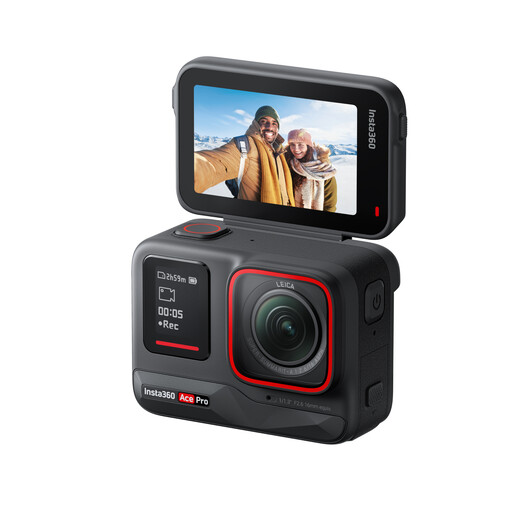
Insta360 Ace Pro - Waterproof Action Camera
WHY IT'S THE RIGHT CHOICE: Perfect for vloggers and image quality enthusiasts. Its large 1/1.3-inch sensor and Leica-engineered lens deliver exceptional performance, especially in low light. The flip-up screen is a huge plus for framing your shots perfectly.
This model avoids the "fake 4K" trap by pairing its high resolution with a premium sensor and lens. Its FlowState stabilization, a market leader, ensures perfectly smooth results without ever compromising on quality.
Low-light image quality, 2.4-inch flip-up touchscreen, waterproof to 10 m without a case.
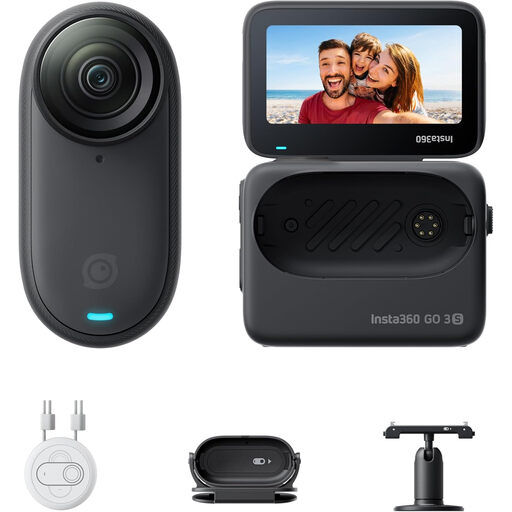
Insta360 GO 3S 128GB - Portable 4K Mini Camera
WHY IT'S THE RIGHT CHOICE: The dream solution for those who prioritise discretion and creativity. This 39g mini-camera attaches anywhere with its magnetic mount, opening the door to unique first-person view (POV) shots during travel or sports, all without the bulk.
Here, the form factor takes precedence over the spec sheet. It avoids the poor stabilization trap with its FlowState technology, which is incredibly effective for its size. Battery life is intelligently managed by the Action Pod, which doubles as a charger and remote control.
Ultra-light and compact, versatile magnetic mounting, waterproof to 10 m, Action Pod with flip-up screen.
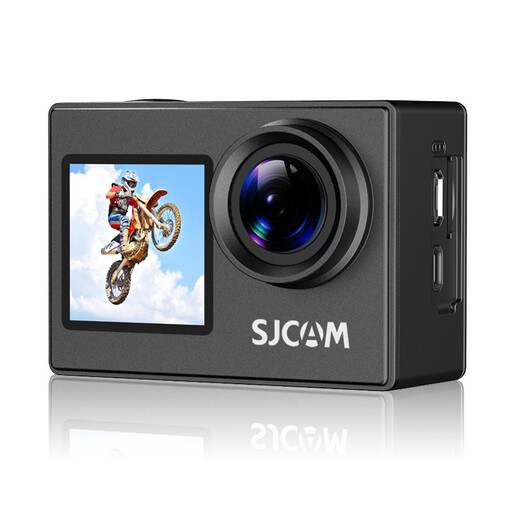
SJCAM SJ4000 Dual Screen Action Camera
WHY IT'S THE RIGHT CHOICE: An excellent entry point into the world of action cameras. It packs in practical features like a dual screen and a 30 m waterproof case, all at a very accessible price point. Ideal for getting started without breaking the bank.
This model plays it straight. It offers electronic stabilization that gets the job done and a reliable waterproof case, without falling into the trap of over-promising. A coherent package with no nasty surprises for its price.
Excellent value for money, practical dual screen, waterproof case included (up to 30 m).
Looking for other options?
Explore our full selection of cameras tested and approved by our experts, all of which meet our quality charter.
Frequently Asked Questions About Action Cameras
What is the real-world battery life of an action camera?
In continuous use with demanding settings (e.g., 4K at 60fps with Wi-Fi and stabilization enabled), you can expect around 60 to 90 minutes of battery life for most models. The figures advertised by manufacturers, often over 120 minutes, are typically achieved under lab conditions. For longer sessions, having spare batteries is essential.
Is 4K really necessary for amateur use?
Not necessarily. If your main goal is to share videos on social media or watch them on a smartphone, a high-quality 1080p or 2.7K resolution is more than enough. The advantage of 4K lies in the ability to crop your footage in post-production without a visible loss of quality and to achieve a higher level of detail on large screens. What's most important is the overall image quality (colours, dynamic range, low-light handling), not the raw resolution.
How do you maintain your camera after using it in the sea?
This is a crucial step to ensure its longevity. After every use in salt water, rinse the camera (and its case, if you used one) thoroughly with fresh, clean water. Pay close attention to the seals, buttons, and hinges to dissolve any salt residue, which is highly corrosive. Then, let it air dry completely, away from direct sunlight, before storing it. Most importantly, never open any compartments (battery, SD card) until the camera is perfectly dry.