
Automotive Diagnostic Scanner Buyer’s Guide for Your Workshop
Check engine light on? It's a driver's worst nightmare. That little amber light often spells anxiety and a hefty bill from the mechanic. Whether you're a professional technician or a passionate DIYer, an automotive diagnostic scanner is your best friend. It's the essential tool for pinpointing a fault, performing basic maintenance, and saving yourself from unnecessary expenses.
But with a crowded market, how do you navigate the options? Should you opt for a simple code reader or a feature-packed professional OBD2 scanner? This guide is here to shed some light. We'll break down the essential criteria and present our top picks for every need and budget.
By the Joybuy Editorial Team
How to Choose Your Automotive Diagnostic Scanner
Before you pull out your credit card, there are a few technical points to check to ensure you're making the right investment.
1. Compatibility and Brand Coverage: The Starting Point
The number one criterion is the tool's ability to communicate with the widest range of vehicles. A good multi-brand fault code reader must, of course, cover major European, Asian, and American manufacturers. For recent cars (post-2020), support for modern protocols like CAN-FD and DoIP is a must-have, as they are now standard on models from brands like GM, Land Rover, and Jaguar. And if you work on FCA group vehicles (Fiat, Chrysler, Alfa Romeo), AutoAuth compatibility is a major plus for secure access to ECUs.
2. Define Your Required Diagnostic Level
A home user won't have the same requirements as a professional workshop.
- For personal use: Reading and clearing fault codes (DTCs) and a few basic service functions (oil reset, brake maintenance, etc.) are more than enough.
- For professional use: Aim for a tool capable of performing all-system diagnostics (engine, transmission, ABS, airbag, air conditioning, etc.). Advanced functions like bi-directional control (to test actuators like injectors or fans) and ECU coding (to configure or replace electronic modules) become essential for saving time and improving accuracy.
3. Consider the Total Cost of Ownership
Watch out for hidden costs! Some tools require an annual subscription for software updates. Without them, your device will quickly become a paperweight, unable to communicate with new models. Choosing a model with lifetime free updates is therefore a significant long-term financial advantage, especially for a professional looking to maximise their return on investment.
Recommended Diagnostic Tools to Consider
We've selected three models that cover a wide spectrum of needs, from the weekend DIY mechanic to the seasoned technician.
1. THINKCAR THINKDIAG BD6: Smart, Portable Diagnostics
Key Features
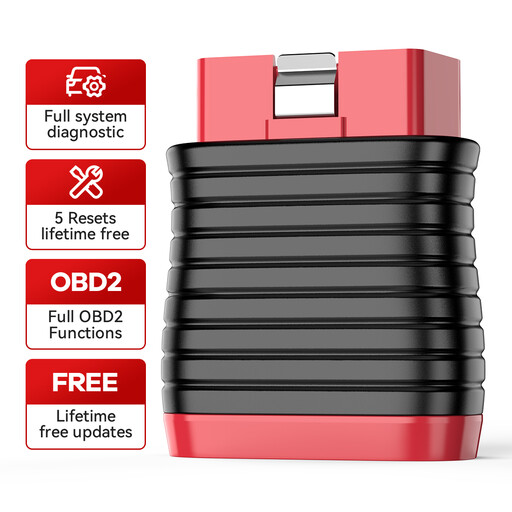
The THINKDIAG BD6 turns your smartphone (iOS or Android) into a powerful OBD2 diagnostic tool. Its main strength? Its simplicity and ultra-compact design. Just plug the dongle into the OBD2 port, connect it to the app via Bluetooth, and you're all set: the full scan can begin.
Pros
- Full All-System Diagnostics: Accesses all of the vehicle's electronic modules (engine, ABS, SRS, transmission, etc.).
- 5 Service Functions Included: Covers essential needs like Oil Reset, Brake Reset, ABS Bleeding, IMMO (Immobiliser) service, and Electronic Throttle Sensor (ETS) reset.
- Lifetime Free Updates: No subscription fees, a real bonus.
- Pocket-Sized Format: Easy to store in a glove box or toolbox.
Who is it for?
This is the perfect choice for individuals and car enthusiasts who want to go beyond a simple fault code reader. It's ideal for performing your own maintenance and diagnosing the majority of faults without breaking the bank on a tablet-based solution.
2. MUCAR 892BT: The Professional, All-in-One Diagnostic Station
Key Features
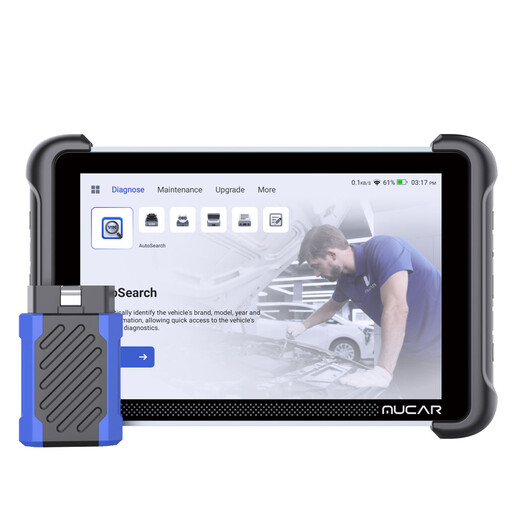
The MUCAR 892BT is a heavy-hitter: a professional OBD2 scanner built for workshops. Supplied with its 8-inch touchscreen tablet and a robust, magnetic VCI, it offers dealership-level (OE) functions like ECU coding and bi-directional control. Its extensive compatibility and lifetime updates make it a secure and profitable investment for intensive use.
Pros
- Advanced Pro Functions: Allows for ECU coding, active tests on components, and access to over 34 maintenance services.
- Extensive Coverage: Compatible with over 100,000 models and supports CAN-FD & DoIP protocols for the latest vehicles.
- Lifetime Free Updates: A game-changing financial benefit for professional use.
- Expandable Ecosystem: Can be enhanced with optional modules (oscilloscope, endoscope, battery tester, etc.).
Who is it for?
Clearly aimed at mechanics, independent technicians, and workshops. This is the solution for those looking for a comprehensive tool capable of tackling the most complex faults and advanced programming on a very wide range of vehicles.
3. MUCAR 682: The Best Balance of Performance and Versatility
Key Features
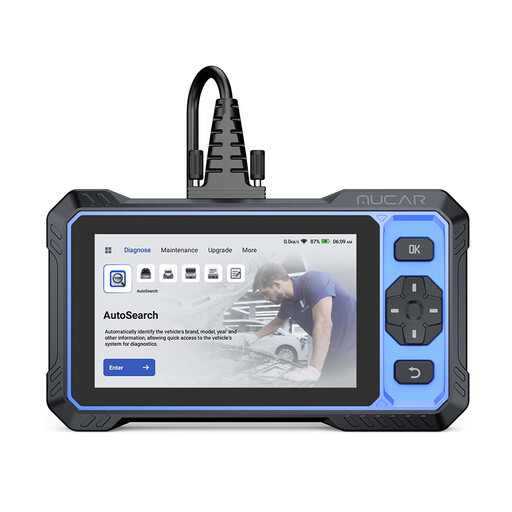
The MUCAR 682 strikes the perfect balance. It packs professional features like bi-directional control and all-system diagnostics into a more compact format with a 6-inch tablet. Its feature-to-price ratio is formidable, especially since it also benefits from lifetime free updates.
Pros
- Bi-Directional Control: Allows you to perform active tests to quickly identify hardware failures.
- Over 20 Maintenance Services: Includes resets for Oil, TPMS, EPB, SAS, BMS, and many more.
- Modern Compatibility: Supports the CAN-FD protocol and FCA AutoAuth access for recent vehicles.
- Lifetime Free Updates: No hidden costs, the tool remains effective year after year.
Who is it for?
This is the smart choice for the expert DIYer or small workshop that needs advanced functions without investing in an exorbitantly priced diagnostic station. Its versatility is a major asset for covering a broad spectrum of jobs.
Can't Find the Right Model for You?
Our selection focuses on versatile tools, but every situation is unique. Are you looking for a very specific function or a tool dedicated to a single brand? Other solutions are available.
Our complete catalogue of automotive diagnostic tools is filled with solutions, from the simplest code reader to the most advanced diagnostic station. Feel free to explore it to find the perfect tool that meets your needs.
Diagnostic Scanners: Your Questions Answered
What's the difference between an OBD2 code reader and a full diagnostic scanner?
A simple OBD2 code reader is limited to reading and clearing fault codes related to the engine and emissions (the well-known EOBD/OBD2 standard). A full diagnostic scanner, on the other hand, goes much further: it communicates with all the vehicle's ECUs (ABS, airbags (SRS), transmission, air conditioning, dashboard, etc.). It also offers service functions, coding, and active tests.
Are updates really that important for a car diagnostic tool?
Yes, and this is a non-negotiable point! Every year, manufacturers release new models and new software versions. A tool that isn't updated quickly becomes obsolete, unable to correctly diagnose recent vehicles. That's why lifetime free updates are the best guarantee of longevity for your investment.
Can I use a diagnostic scanner on any car?
Most scanners are described as multi-brand and work with almost all vehicles that comply with the OBD2 standard (in Europe: petrol models since 2001, diesel since 2004). Be aware, however, that the availability of advanced functions (coding, adaptations, bi-directional control) always depends on the vehicle's make, model, and year. Our advice: always check the manufacturer's compatibility list before making a purchase.