
Automotive Diagnostic Tools: A Buyer’s Guide to Choosing the Right One
The check engine light comes on your dashboard: it's the start of anxiety and the fear of a hefty garage bill. Getting an automotive diagnostic tool is the smartest way to take back control and make serious savings. The problem is, the market is flooded with marketing promises that too often lead to disappointing purchases. Before pulling out your credit card, it's crucial to know how to avoid the common pitfalls to choose a tool that's genuinely suited to your needs.
To help you see things more clearly, here are the three pitfalls to absolutely avoid:
- The mirage of "free lifetime updates": This is an enticing promise that often hides a rude awakening. Frequently, "free" only applies to the most basic functions (like reading engine codes), while advanced diagnostics or support for new vehicle brands become paid features. Even worse, updates may stop altogether after a few years, rendering your tool ready for the scrap heap.
- The false promise of universal compatibility: Many entry-level tools boast of covering "all systems." In reality, their coverage is often limited to the four main modules (engine, ABS, airbag, transmission) and on only a handful of models. Advanced features like ECU coding or bi-directional control are rarely as comprehensive as the spec sheet claims.
- Hidden subscriptions: A very attractive entry price can conceal recurring costs. After a one-year free period, access to essential functions like an oil reset or specific system diagnostics may require a steep annual subscription. The bargain then turns into a financial black hole.
The Essential Criteria for an Informed Choice
To avoid falling into the trap, here are the technical criteria that truly matter when judging the performance and lifespan of your future automotive diagnostic tool.
1. Compatibility with Modern Protocols: CAN FD and DoIP
Modern vehicles (generally post-2020) rely on new communication protocols to manage the extreme complexity of their onboard electronics.
- CAN FD (Flexible Data-Rate): Essential for diagnosing recent models from the General Motors group (Chevrolet, Buick, GMC, Cadillac) as well as other manufacturers. It ensures much faster and more stable communication.
- DoIP (Diagnostics over Internet Protocol): Required for recent models from European manufacturers like BMW (F/G chassis), Volvo, Jaguar, or Land Rover. This protocol uses an Ethernet-type connection to perform complex diagnostics and software (firmware) updates.
An OBD2 scanner that skips these protocols will quickly become obsolete if you work (or plan to work) on modern cars.
2. The Scope of Functions: From Simple Code Reader to Total Control
Not all diagnostic tools are created equal—far from it. Their capabilities can be classified into three main categories:
- Level 1: Fault Code Reader. It reads and clears fault codes from the engine system (the infamous "check engine" light) and displays some basic data. This is the bare minimum.
- Level 2: Diagnostic Tool with Service Functions. In addition to reading codes from multiple systems (engine, ABS, airbags, transmission, etc.), it offers reset functions for routine maintenance: oil change, brake pads (EPB), steering angle sensor (SAS), battery (BMS), etc.
- Level 3: Professional Diagnostic Tool. The top of the line. This level includes comprehensive all-system diagnostics, bi-directional control (or actuator tests) to directly command components (fans, injectors, power windows, etc.) to identify the source of a failure, and ECU coding to adapt or configure new control units.
3. The Licensing Model: One-Time Purchase or Subscription?
The total cost of ownership is a decisive factor.
- Free Lifetime Updates: Ideal for DIY mechanics and those on a tight budget. You pay once and enjoy updates at no extra cost. Double-check that this free access also applies to advanced functions and not just the basic software.
- Annual Subscription: The standard for professional tools. After a free period (often 1 or 2 years), a subscription is required to continue receiving updates (new vehicles, new features). This model ensures continuous support and access to the very latest technologies, a non-negotiable point for professional use.
Top Diagnostic Tool Recommendations
Rather than an endless list, we've chosen to match user profiles with products that precisely meet their needs, all while avoiding the pitfalls we've just discussed.
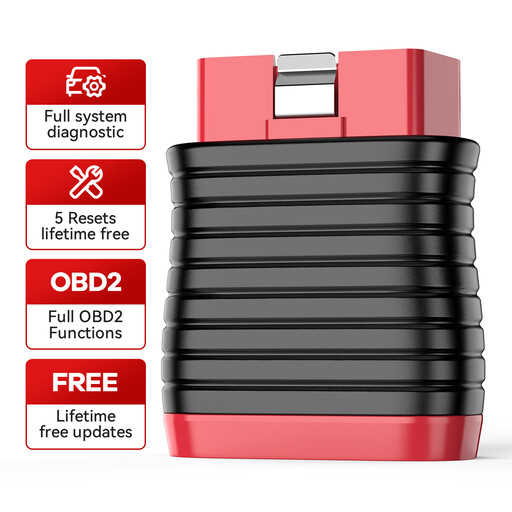
THINKCAR THINKDIAG BD6
Why we recommend it: Perfect for beginners, this Bluetooth OBD2 scanner dongle connects to your smartphone. It allows for a full all-system diagnosis and performs the 5 most common resets (oil, brakes, etc.) for basic maintenance on the family car.
It avoids the hidden subscription trap by offering lifetime free access to its 5 reset functions and all-system diagnostics. Its product page is transparent about its limitations: no false promises about advanced features it doesn't have.
Budget-Friendly: A one-time purchase with no hidden fees for the included functions.
Simplicity: Ultra-intuitive use via a mobile app (iOS and Android).
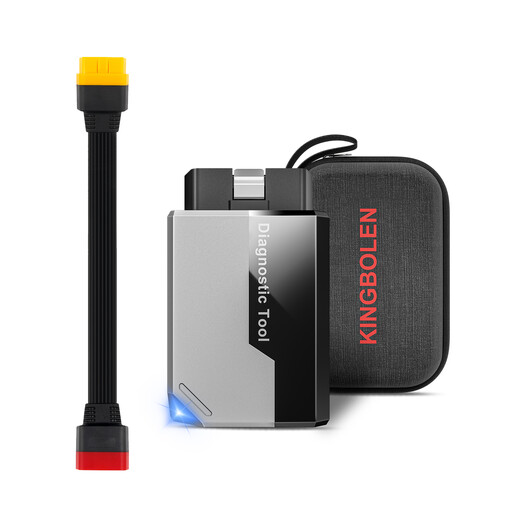
KINGBOLEN Ediag Elite
Why we recommend it: For the savvy enthusiast who wants to go beyond simple maintenance. This tool not only offers comprehensive multi-brand auto diagnostics but also advanced features like bi-directional control to actively test components, all with lifetime updates.
It avoids the trap of watered-down "free updates." Here, lifetime free access genuinely applies to a full suite of 15 service functions and even actuator tests, offering true, lasting diagnostic power with no extra costs.
Lifetime Advanced Functions: Permanent access to bi-directional control and 15 reset services.
Future-Proof: Supports the CAN FD protocol, which is essential for recent GM vehicles.
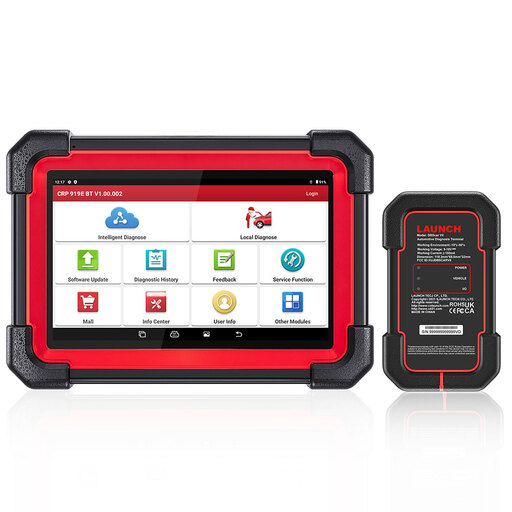
LAUNCH X431 CRP919E BT
Why we recommend it: A professional diagnostic tool built for performance. With its dedicated tablet, wireless VCI, and native support for CAN FD and DoIP protocols, it's ready for the challenges of today and tomorrow. A true investment for a workshop or independent mechanic.
It avoids the trap of overpromising. It advertises OE-level capabilities and it delivers: ECU coding, comprehensive actuator tests, and over 31 reset services, with an ultra-wide and constantly updated vehicle coverage.
Pro-Level Power: CAN FD/DoIP support, ECU coding, and bi-directional control.
Robust Hardware: A responsive, long-battery-life tablet and Bluetooth VCI for unrestricted wireless work.
Looking for other options?
We have curated a full range of products that meet our strict selection criteria and current standards.
Frequently Asked Questions (FAQ)
Is a diagnostic tool compatible with all cars?
Most diagnostic tools are compatible with the OBD2 standard, which has been mandatory in Europe for petrol cars since 2001 and diesel cars since 2004. This standard guarantees access to engine system diagnostics. However, compatibility for advanced functions (ABS/airbag diagnostics, resets, coding, etc.) depends on the vehicle's make, model, and year. It is therefore imperative to check the tool's compatibility list with your specific vehicle(s) before any purchase.
Do I need a subscription to use an OBD2 scanner?
It all depends on the model. Entry-level tools often work without a subscription, sometimes with free lifetime updates for basic functions. More professional models, on the other hand, typically include a period of free updates (1 to 2 years). After that, an annual subscription is required to continue receiving data for new vehicles and new features.
Can I damage my car with a diagnostic tool?
For simple code reading and clearing functions (passive diagnostics), the risk is virtually zero. However, using advanced functions like bi-directional control (which commands components) or ECU coding (which modifies a control unit's parameters) carries risks if the operation is not performed correctly. It is strongly advised to fully understand each function and follow the instructions to the letter before attempting such procedures.