
Automotive Diagnostic Tool Buyer's Guide: How to Choose the Right Tool
As a product expert at Joybuy, I navigate the jungle of diagnostic tools daily. Between marketing promises and real-world performance, it's easy to make the wrong choice. Whether you're a DIY enthusiast or a seasoned professional, choosing the right automotive diagnostic tool is the key to working efficiently without pulling your hair out. This guide breaks down the pitfalls to avoid and the technical criteria you should never, ever overlook.
The 3 Pitfalls to Avoid Before Buying Your Diagnostic Tool
The market is flooded with options, but be warned: not all are created equal. Here are the three most common mistakes—the ones that will cost you dearly in time and money.
- The "Free Lifetime Updates" Mirage: This is a heavy-hitting marketing claim, but it often hides a more nuanced reality. Frequently, only basic functions (reading/clearing engine codes) are actually updated for free. Advanced features, like resetting service indicators or coding, may require a paid subscription after a year. Worse, the term "lifetime" sometimes refers to the product's lifespan... not yours.
- Limited "Multi-Brand" Compatibility: A tool might boast that it covers "99% of vehicles" but then fail on the latest models. A lack of support for modern protocols like CAN FD (essential for GM or Ford since 2020) or DoIP (for recent BMW, Volvo, Jaguar models) will make your tool obsolete much faster than you'd expect.
- The Hidden Cost of Subscriptions: Some tools have an attractive purchase price but lock up or lose their key functions once the initial subscription (often one year) expires. Your tool then becomes a very expensive paperweight unless you pay up for an often hefty annual subscription.
The Technical Criteria That Truly Make a Difference
To make the right choice, forget the marketing jargon and focus on the specifications that really matter.
Protocol Compatibility: The Key to Modern Vehicles (CAN FD & DoIP)
Don't view support for CAN FD and DoIP protocols as a mere gimmick. It's an absolute prerequisite for correctly diagnosing vehicles released after 2019-2020.
- CAN FD (Flexible Data-Rate): It ensures much faster communication and the transfer of large data volumes. Essential for in-depth diagnostics on recent models from General Motors, Ford, and many others.
- DoIP (Diagnostics over Internet Protocol): This is used for diagnosing brands like BMW (F/G chassis), Volvo, and Jaguar/Land Rover since 2017. Without it, accessing many ECUs is simply impossible.
An OBD2 scanner that ignores these protocols will leave you high and dry when faced with an increasingly modern vehicle fleet.
Diagnostic Depth: More Than Just a Code Reader
A simple code reader only reads and clears engine-related fault codes. A diagnostic tool worthy of the name goes much further:
- Full System Diagnostics: It must be able to scan all of the vehicle's systems (ABS, SRS/Airbag, transmission, climate control, etc.).
- Bidirectional Control (or Active Test): This function allows you to send commands to a component to test its operation without having to remove it. For example, you can activate a fan, control an EGR valve, or test injectors directly from the tablet. A huge time-saver for pinpointing a fault.
- ECU Coding:ECU coding allows you to adapt new components after replacement (injectors, battery module, etc.) or even activate hidden features (like auto-folding mirrors upon locking).
Update Model: Calculate the True Long-Term Cost
The business model is a decisive factor. Free lifetime updates are an excellent indicator of long-term value, provided they truly cover all functions. For subscription-based tools, calculate the total cost of ownership over 3 to 5 years. It's the only way to objectively compare offers.
Our Selection of Diagnostic Tools for 2026
To help you see more clearly, here are our recommendations, each tailored for a specific user profile.
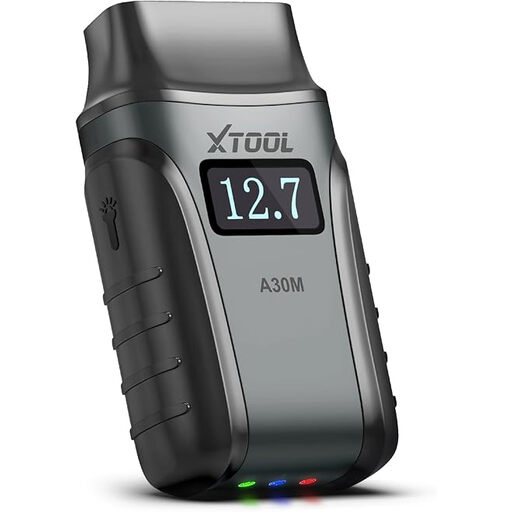
XTOOL A30M V2.0 OBD2 Scanner Diagnostic Tool
Why we chose it: Perfect for maintaining the family's vehicles. Its bluetooth dongle format connects to your smartphone (iOS/Android) and offers advanced functions far beyond a simple code reader, without the bulk of a tablet.
It includes lifetime software updates with no subscription required. The cost of ownership is therefore perfectly transparent and unbeatable in the long run.
It features bidirectional control and over 26 reset services—features rarely seen at this price point. Compatible with CAN FD and FCA protocols.
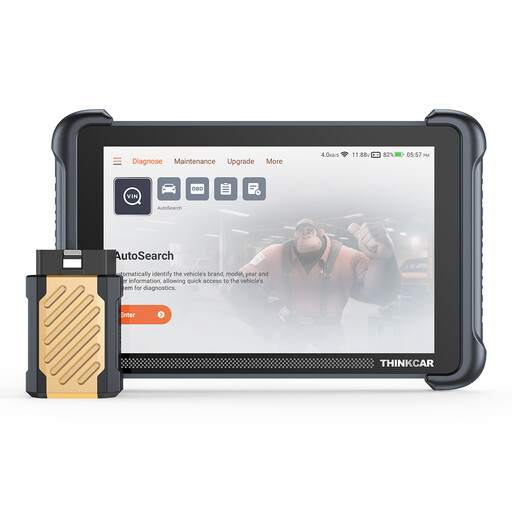
THINKCAR ThinkScan 689BT OBD2 Diagnostic Tool
Why we chose it: A stunning balance between advanced features and an affordable price point. Its 8-inch tablet, wireless connection, and wide coverage make it a go-to ally for an independent technician or small garage.
It natively supports CAN FD and DoIP protocols and includes lifetime updates, protecting you from planned obsolescence and surprise subscriptions.
It offers ECU coding, bidirectional control, and over 34 service functions. These are capabilities normally reserved for much, much more expensive tools.
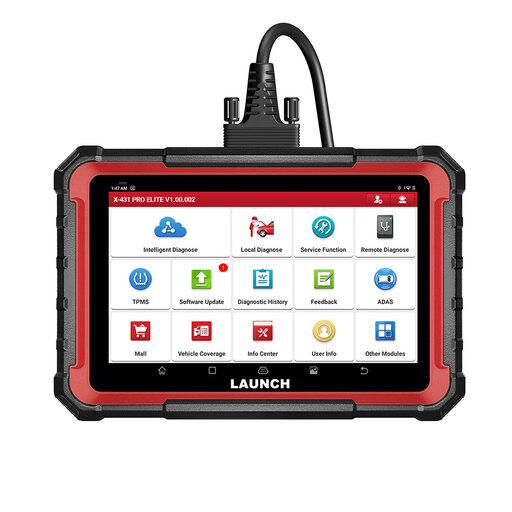
LAUNCH X431 PRO ELITE 8 inch Car Diagnostic Tools
Why we chose it: The quintessential professional diagnostic tool, built for intensive use. It offers dealership-level (OE-Level) diagnostic depth, impressive vehicle coverage, and the ability to expand its capabilities via external modules (oscilloscope, etc.).
Its model includes 2 years of free updates. Beyond that, the subscription is fully justified by its power and coverage—an investment that quickly pays for itself for a workshop that bills for its diagnostic services.
Full OE-level diagnostics, advanced ECU coding, guided functions for the VAG group, and native CAN FD/DoIP compatibility for flawless coverage.
Looking for other options?
We have compiled a complete selection of products that meet these demanding selection criteria and the latest industry standards.
Frequently Asked Questions about Automotive Diagnostic Tools
Is a tool with "free lifetime updates" truly free of hidden costs? With reputable brands, the promise is generally kept for the functions advertised at purchase. However, it's always wise to verify if this applies to the entire software suite (diagnostics, services, coding) or just a part of it. Read the product description carefully to see if any highly specialized functions might require an additional payment.
Do I really need CAN FD and DoIP protocols? If you plan to work on vehicles produced after 2020, the answer is a resounding yes. More and more manufacturers, especially European and American ones, are adopting these protocols to manage the soaring complexity of their electronic systems. Investing in a compatible tool today ensures you won't be stuck tomorrow.
What's the difference between a simple code reader and a full diagnostic tool? A basic code reader (often under €50) is limited to reading and clearing error codes from the engine system (the infamous "Check Engine" light). A comprehensive automotive diagnostic tool communicates with all of the vehicle's ECUs (ABS, airbag, transmission, A/C, etc.), displays real-time data, and offers service functions (oil reset, brake maintenance, etc.) and, for the most powerful ones, active tests and coding.