
Which Electric Toothbrush to Choose in 2026 ? Our Top Picks for Effective Brushing
With the vast array of electric toothbrush models available, it can be difficult to navigate the options. Between the different technologies, connected features, and brand promises, making an informed choice is a challenge. As a Product Recommendation Manager at Joybuy, my role is to help you gain clarity by analysing the objective features of products, allowing you to find the model that truly fits your needs and budget.
This guide focuses on practical criteria to assist your decision, cutting through the superfluous marketing claims.
How to Choose Your Electric Toothbrush ? 3 Points to Check
Before comparing models, it's helpful to understand the elements that differentiate one electric toothbrush from another. Here are a few key points to consider.
1. Understanding Brushing Technologies
Two main technologies dominate the market:
- Sonic technology: Toothbrushes of this type, like the sonic toothbrush, use very high-frequency vibrations. This rapid movement generates micro-bubbles that help clean deep between teeth and along the gumline, offering a clean that is both gentle and effective.
- Oscillating-rotating (or magnetic) technology: Popularised by brands like Oral-B, this technology combines rotations and pulsations. The brush head, typically round, surrounds each tooth to dislodge plaque. Recent "magnetic" models use a frictionless drive for quieter operation and more precise energy transfer.
The choice between these two technologies often comes down to personal preference and individual sensitivity.
2. The Usefulness of a Pressure Sensor
Brushing too hard can damage tooth enamel and irritate gums. A toothbrush with a pressure sensor has become an almost standard feature on mid-range and high-end models. It alerts you, often with a light or vibration, when you apply excessive force. This is a major asset for preserving your long-term oral health.
3. Smart Features: A Bonus, Not a Necessity
A connected or smart toothbrush syncs with a mobile app to track your brushing habits, guide you zone-by-zone, and provide you with a detailed report. Some models even integrate a screen on the handle for real-time feedback. These tools can be highly motivating for improving your technique, but they are not essential for achieving a good clean. Assess whether you will actually use these functions daily before investing.
Our Selection of Electric Toothbrushes for 2026
This electric toothbrush comparison is based on an analysis of technical specifications and features offered by the manufacturers.
1. usmile Y10: Battery Life and Smart Simplicity
-
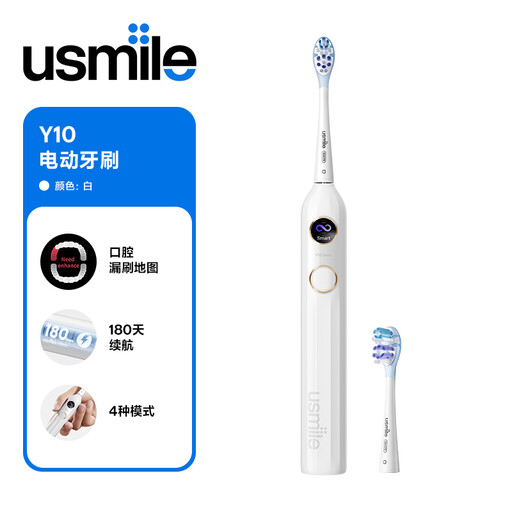
Why we recommend it: The usmile Y10 model stands out for two major assets: an exceptional battery life of up to 180 days and a smart screen integrated directly into the handle. This screen provides real-time guidance without needing a smartphone connection, which greatly simplifies the user experience.
-
Pros:
- Remarkable battery life: A single charge for approximately six months of use, ideal for travellers or those who often forget to charge their devices.
- Integrated guidance screen: Displays brushing zones and remaining time, making brushing coaching accessible to everyone.
- Sonic technology with 4 cleaning modes to adapt to different needs (Clean, White, Sensitive, etc.).
- Pressure sensor to protect gums.
-
Who is this product for: Users seeking the benefits of a smart toothbrush (guidance, tracking) without the hassle of using a mobile app. Its very long battery life makes it a relevant choice for frequent travellers.
2. Philips Sonicare Series 6500: Advanced Customisation
-
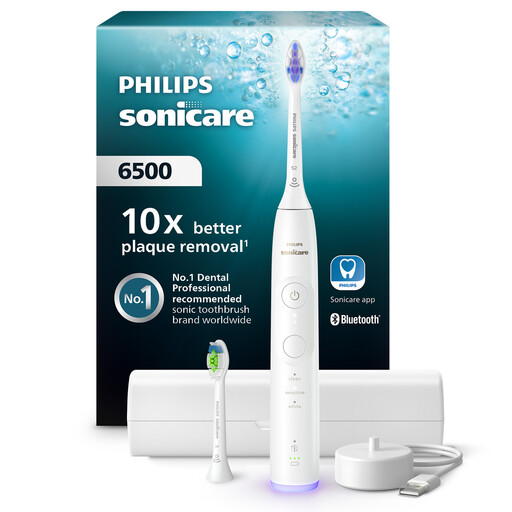
Why we recommend it: The Philips Sonicare range is a benchmark in sonic technology. The 6500 model offers an excellent balance between customisation and performance. With its 3 modes and 3 intensity levels, it provides 9 brushing combinations for a tailored experience.
-
Pros:
- Proven sonic technology with 62,000 movements per minute. The manufacturer states it is effective at removing plaque.
- 9 brushing settings for precise adaptation to individual sensitivity and goals (Clean, White, Gum Care).
- Visible pressure sensor that alerts with a light and vibration.
- Bluetooth connectivity with the Philips Sonicare app for progress tracking and personalised tips.
- BrushSync technology that reminds you when to change the brush head.
-
Who is this product for: Users who appreciate sonic technology and want a high degree of customisation. It's a solid choice for those who want to track and improve their brushing routine via a dedicated app.
3. ORAL-B iO Series 7: Magnetic Technology and Interactive Coaching
-
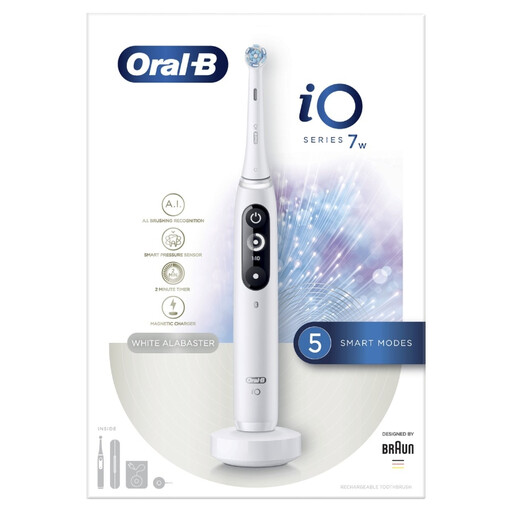
Why we recommend it: The ORAL-B iO 7 represents a major evolution with its magnetic drive, which ensures quiet and precise brushing. Its interactive screen and artificial intelligence offer real-time coaching for optimal brushing coverage.
-
Pros:
- iO magnetic technology for gentle micro-vibrations and a professional clean feeling.
- Interactive OLED screen on the handle to select modes and receive encouragement.
- Artificial Intelligence with 3D tracking (via the app) to ensure you never miss a zone.
- Smart pressure sensor that indicates with a colour (red, white, green) whether the pressure is too hard, too soft, or just right.
- Fast magnetic charger (full charge in 3 hours).
-
Who is this product for: Tech enthusiasts looking for an interactive and engaging brushing experience. The instant feedback, both on the handle and via the app, is an excellent driver for perfecting your technique daily.
Looking for Targeted Whitening Action ?
The models presented above all offer modes dedicated to whitening. However, if this is your top priority, it may be worthwhile to explore ranges specifically designed for this purpose. Some models come with polishing brush heads or intensive programs to remove surface stains.
To discover options focused on this goal, you can browse our selection of Whitening Toothbrushes.
Frequently Asked Questions (FAQ)
What is the difference between a sonic and an oscillating-rotating toothbrush ?
The main difference lies in the head's movement. A sonic toothbrush vibrates at very high speed, while an oscillating-rotating brush performs rotational and pulsating movements. The choice depends on your preference: some find sonic brushing gentler, while others prefer the "tooth-by-tooth" cleaning sensation of oscillating-rotating technology.
How often should you change the head of an electric toothbrush ?
Most manufacturers and dentists recommend replacing the brush head every three months, or sooner if the bristles are visibly frayed. Frayed bristles lose their effectiveness and can harbour bacteria. Many electric toothbrush models have a wear indicator or a reminder (via the app or on the handle) to notify you.