
2026 Camping Tent Buyer's Guide: How to Choose the Perfect Shelter for Your Adventures
By the Joybuy Product Recommendations TeamPublished July 18, 2026
Choosing a camping tent can be overwhelming given the sheer number of options. Capacity, weight, waterproofing, ease of setup… the criteria are numerous, and it's easy to get lost. This guide is here to cut through the noise. Whether you're a solo backpacker, an adventurous couple, or a family seeking comfort, we'll get straight to the point: giving you the keys to find the ideal shelter for your next getaway.
The Essential Criteria for Choosing Your Tent
Before diving into our top picks, let's review the features that make all the difference. Here are the three fundamental points to consider to ensure you make the right choice.
1. Capacity and Living Space: Beyond the Person Count
The capacity stated by manufacturers (2-person tent, 4-person tent, etc.) is often optimistic: it corresponds to the number of sleeping pads you can squeeze in side-by-side. For a minimum level of comfort and to keep your gear dry, the smart move is to size up by one person. A family tent offers more than just an oversized bedroom: it includes a proper living area or a vestibule (an enclosed awning), which is essential for storing bags, cooking under cover, or simply reading a book on rainy days.
2. Weight and Packed Size: The Backpacker's Dilemma
Weight is the backpacker's worst enemy. If you're carrying your home on your back, every gram counts. A hiking tent worth its salt must be lightweight, often coming in under the 2 kg mark, and ultra-compact when packed. Conversely, for "car camping" where the vehicle does all the heavy lifting, weight is no longer an issue. You can then afford the luxury of a heavier model that is far more spacious and comfortable. For bivouacking and trekking, a lightweight tent isn't an option—it's a necessity.
3. Waterproofing and Durability: Braving the Elements
Waterproofing is measured by its hydrostatic head (mm). This rating, which may seem technical, represents the height of a water column the fabric can withstand before moisture seeps through. In practical terms:
- Flysheet (outer tent): A rating of 2000 mm is a good starting point for a waterproof tent that will handle typical showers. To face downpours or mountain storms, aim for 3000 mm or higher.
- Groundsheet: This is the part most exposed to pressure (from your weight and ground moisture). A rating of 4000 mm is the minimum to stay dry.
Also, consider seasonality. A "3-season" tent is perfect for spring, summer, and autumn. For harsh weather (strong winds, snow), only a 4-season tent with a reinforced frame will hold up.
Our Selection of Camping Tents for 2026
Enough theory, let's get practical. Here are a few models that caught our eye for their excellent performance-to-price ratio and their suitability for different uses.
NatureHike Cloud-Up 1 Lightweight 1-Person Dome Tent
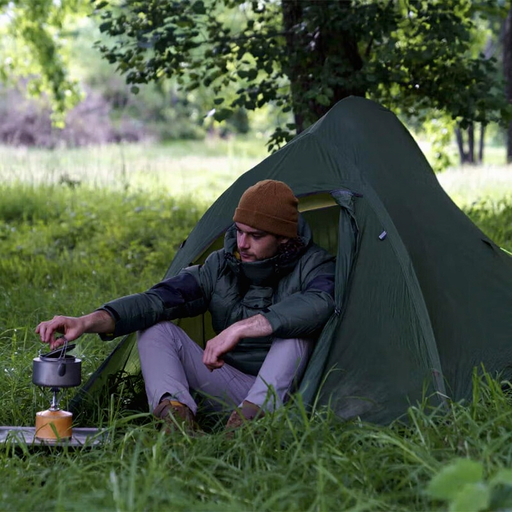
Why it stands out: This is the archetype of the featherlight hiking tent designed for performance. Its secret? Cutting-edge materials (20D silicone-coated nylon, 7001 aluminium poles) for a near-perfect balance of low weight and durability.
-
Pros:
- Featherlight: Weighing only 1.5 kg (all-inclusive), you'll forget it's in your pack.
- Excellent Waterproofing: With a 4000 mm (PU4000) rating for both the flysheet and floor, it will keep you dry even in a thunderstorm.
- Optimised Ventilation: The B3 mesh inner tent ensures good air circulation to minimise condensation.
-
Who is it for?: Solo adventurers (backpackers, trekkers, mountaineers) looking for a high-performance 3-season shelter without sacrificing protection from the elements for the sake of saving weight.
Portal 60514 5-Person Tunnel Tent
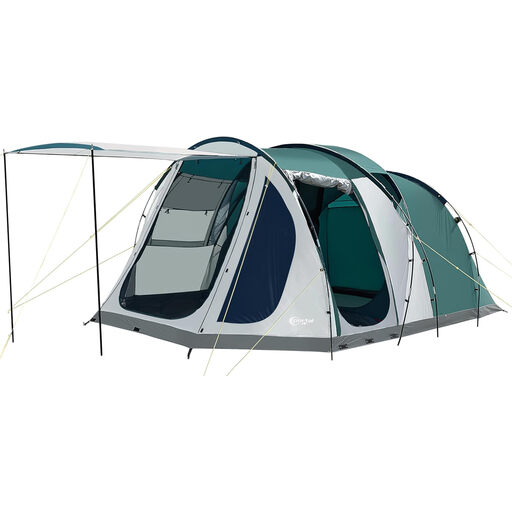
Why it stands out: A true mobile studio for camping, this tunnel-style family tent focuses entirely on space and comfort. Its main advantage? A 2 m headroom that allows you to stand up straight—a game-changing luxury on multi-day trips.
-
Pros:
- A Real Living Area: With a 7 m² bedroom and a 5.8 m² living room, you won't be stepping on each other, making it easy to organise camp life.
- Full Protection: Its polyester fabric (with a 3000 mm waterproof rating) and "bathtub" style groundsheet (sewn to the flysheet) create an effective barrier against rain and wind.
- Versatile Awning: The front or side door can be converted into an awning to extend the sheltered living space.
-
Who is it for?: Families and groups (up to 5 people) who go on holiday by car and prioritise comfort and space over packed size.
ochama×J.ZAO 3-4 Person Dual-Layer Automatic Tent
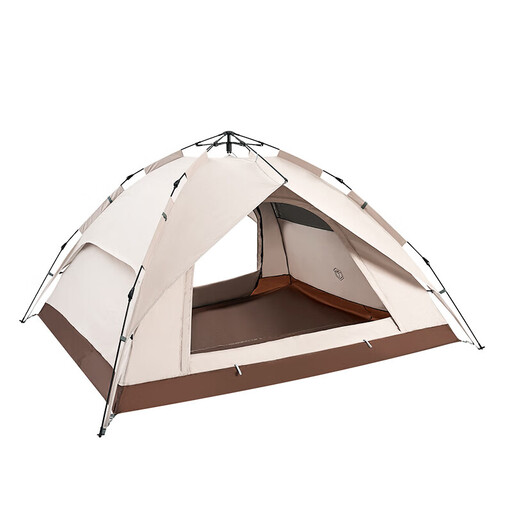
Why it stands out: Its killer feature? Absolute simplicity. This pop-up (or instant) tent deploys in the blink of an eye, making it the perfect ally for casual campers, festival-goers, or families who want to avoid the hassle of setup.
-
Pros:
- Near-Instant Setup: Its automatic deployment system is child's play, for both opening and closing.
- Serious Protection: With a 3000 mm waterproof rating, it holds its own against traditional models and easily handles unpredictable weather.
- True Double Wall: Its dual-layer design effectively separates the inner tent from the outer flysheet, ensuring better insulation and limited condensation.
-
Who is it for?: Families and small groups (3-4 people) who want to enjoy camping without the constraints, whether for a weekend, a festival, or a first-time experience.
NatureHike P-Series 4-Season 2-Person Camping Tent
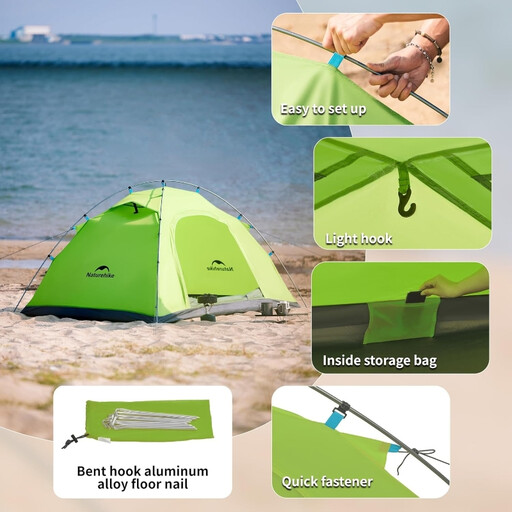
Why it stands out: This model plays the extreme versatility card. Designed as a 4-season tent, it provides enhanced protection against the elements while maintaining an impressively low weight for a 2-person tent in this category.
-
Pros:
- 4-Season Ready: Its more robust structure and materials allow it to handle conditions that a standard 3-season tent could not.
- UV Filter: Its UV-treated fabric (UPF) is a real bonus in high mountains or during long sun exposure.
- Appreciable Lightness: At 1.65 kg, it remains easy to carry on hikes where durability is more important than absolute minimum weight.
-
Who is it for?: Adventurous duos who camp year-round, including in moderate winter conditions. It's the Swiss Army knife of two-person tents.
Looking for an Even Faster Solution?
For those in a hurry or for whom setup is a real chore, there's a solution: the instant-setup tent. Known as "pop-up" or "2-second" tents, these models do away with pole assembly and allow you to set up camp in record time. Ideal for weekends, festivals, or as a secondary tent.
️ Discover our full range of Outdoor Pop-Up Tents and find the model that will simplify your getaways.
Frequently Asked Questions About Camping Tents
How do I choose the right size camping tent?
A friendly tip: always go one size up from the number of campers. For a couple, a 3-person tent is perfect to avoid sleeping with your backpacks on your lap and to keep your gear dry. For families, break out the tape measure and check that the bedroom dimensions are compatible with your air mattresses.
What does the waterproof rating (e.g., 3000 mm) mean?
This rating (in mm) measures the fabric's resistance to water pressure from a column of water. The higher the number, the more waterproof the tent. The threshold for being considered waterproof is 1500 mm. For peace of mind in most European conditions, a setup with a 3000 mm flysheet and a 5000 mm groundsheet is an excellent rain-proof guarantee.
Is a 3-season tent sufficient for most uses in the UK and Europe?
Yes, by a long shot. A 3-season tent is designed for spring, summer, and autumn. It provides good ventilation in warm weather and sufficient protection against moderate rain and wind. The 4-season tent is specialist gear, only essential if you are camping in high mountains, in the snow, or in the face of violent winds.