
Cordless Paint Sprayer Buying Guide: Features, Tips, and Pitfalls
The roller, the brush, the hours spent painting for an often uneven result... a frustration every DIYer knows. The paint sprayer, on the other hand, promises a lightning-fast application and a smooth, professional-grade finish. The problem? The market is flooded with models making tempting promises that too often turn into costly disappointments.
As a product expert at Joybuy, my mission is to help you see things more clearly. Let's break down the pitfalls to avoid and the essential criteria for making a smart choice that's perfectly suited to your projects.
The 3 Pitfalls to Avoid Before Buying a Paint Sprayer
It's easy to be seduced by slick marketing. Here are three key things to watch out for that will save you from buyer's remorse.
-
The Myth of the "All-in-One" Nozzle: Many manufacturers boast absolute versatility with just one or two nozzles. The on-the-ground reality is quite different: a nozzle designed for a thin varnish will almost systematically clog with thick wall paint. Conversely, a nozzle for thick paint will create excessive spray mist (the infamous overspray) and waste your product with thin lacquers. A good sprayer must offer several nozzle sizes, each adapted to a specific viscosity.
-
The False Economy of Battery Life: The rock-bottom price of a cordless paint sprayer seems tempting, until it gives out after 20 minutes, right in the middle of painting your fence. The advertised battery life is almost always calculated under lab conditions, with highly diluted paint and minimal flow. For any large-scale job, a single battery is never enough.
-
The Cleaning Nightmare: A paint sprayer requires maintenance. Rigorous maintenance. Some models, with their convoluted designs and inaccessible parts, turn cleaning into a real chore. And poorly cleaned paint that dries in the conduits is a surefire way to render your tool useless after its second use.
A Closer Look at Technical Criteria for a Confident Purchase
To avoid making a mistake, focus on a few key technical specifications that make all the difference in performance and versatility.
Spray Technology: HVLP, the King of Precision
The majority of consumer models rely on HVLP (High Volume, Low Pressure) technology. This system propels a large volume of air at low pressure, allowing the paint to be applied in thin, controlled layers.
- Advantages: Less overspray, more precision for details, ideal for painting furniture without any brush marks or objects with complex shapes.
- Disadvantages: A slower flow rate than professional Airless systems, making it less suitable for facades covering several hundred square meters.
For most home renovation projects, an HVLP paint station remains the most sensible choice.
Power, Flow Rate, and Viscosity: The Winning Trio
These three elements are inseparable and must match your needs:
- Power (in Watts): This determines the motor's ability to handle liquids of varying thickness. For a paint sprayer intended for walls and ceilings, aim for at least 500W to handle the viscosity of acrylic paints.
- Maximum Viscosity (in DIN-s): This is the unit that measures the thickness of a liquid. Wall paint is much more viscous than a wood stain. Ensure the device's maximum DIN-s value is compatible with the paints you plan to use. A viscometer (a small measuring cup) is often included to help you achieve the perfect dilution.
- Adjustable Flow Rate (in ml/min): This is a non-negotiable feature. It allows you to switch from a wide, fast application on a wall to high-precision work on corners or chair spindles, simply by adjusting the flow.
Corded or Cordless: The Power Source Showdown
The choice depends entirely on your project environment. A corded electric paint sprayer offers constant, unlimited power, ideal for long indoor sessions within reach of an outlet.
The cordless paint sprayer, however, offers absolute freedom of movement. It is essential for an outdoor wood sprayer (fences, garden sheds) or for areas without electricity. If you opt for cordless, pay close attention to the battery capacity (in Ah) and favour packs with two batteries or models compatible with a tool ecosystem you already own (a great hack!).
Recommended Paint Sprayers
Forget the endless lists. Here are our targeted recommendations for three types of DIYers, based on the criteria we've just broken down.
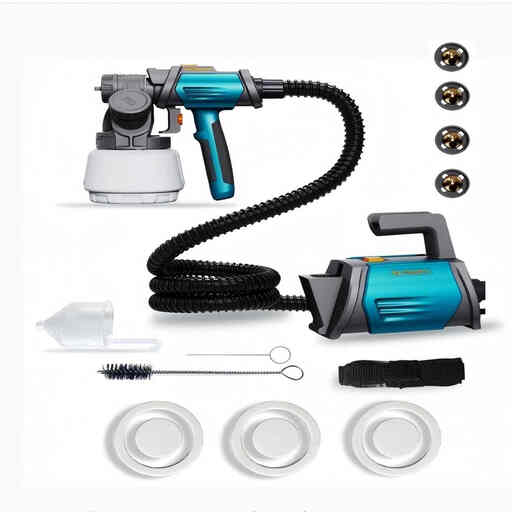
TILSWALL Shark 800 HVLP Electric Paint Sprayer
Why it's a great choice: Perfect for large-scale renovations (walls, ceilings, large fences). Its design with a separate motor unit and shoulder strap significantly lightens the weight in your hand, reducing fatigue during long sessions. The corded power supply ensures a constant 800W of power, without ever faltering.
Thanks to its 4 brass nozzle sizes (more durable) and high power, it handles thick paints up to 120 DIN-s. No more problems with "universal" nozzles that clog.
The trio of 800W power, a 2.5 m hose, and a 1300 ml container allows you to cover vast surfaces with formidable efficiency and fewer breaks for refills.
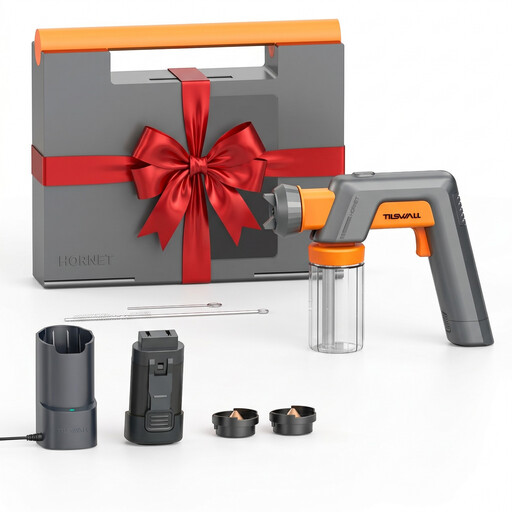
Tilswall Hornet - Ultra-lightweight Cordless Sprayer
Why it's a great choice: The ultimate weapon for those seeking manoeuvrability. Perfect for refinishing furniture, painting doors, shutters, or any project that demands precision and freedom of movement. Its feather-light weight is a real blessing for avoiding fatigue.
It sidesteps the battery life trap by including two batteries in the pack. You can work without interruption: while one is charging, the other is on the tool.
At only 450 g, it's one of the lightest models on the market. The comfort is unparalleled for finishing work and painting sessions at arm's length.
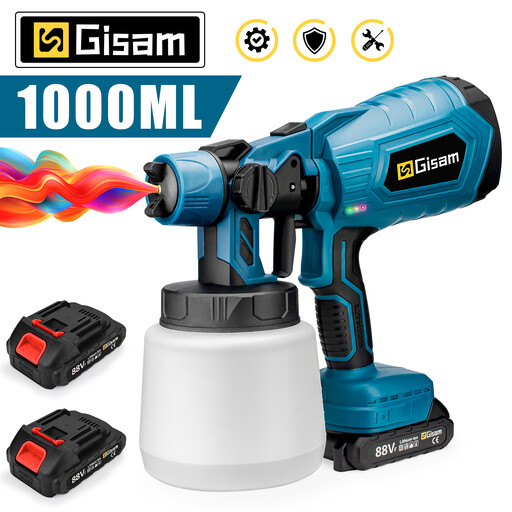
Gisam Cordless Paint Sprayer for Makita 18V Battery
Why it's a great choice: This is the smart choice for users who already own Makita 18V cordless tools and batteries. It allows you to get a high-performance cordless paint sprayer without investing in a new battery and charger ecosystem.
By leveraging the proven reliability and performance of Makita batteries, it bypasses the pitfall of low-quality, short-lived generic batteries with poor endurance.
The savings and convenience are obvious. Its 1000 ml container offers a comfortable capacity for a cordless model.
Looking for other options?
We've put together a complete selection of paint sprayers that meet our criteria for performance and ease of use.
Frequently Asked Questions (FAQ)
Do you always have to dilute paint before using it in a sprayer?
Yes, it's an almost unavoidable step. Off-the-shelf paints, especially for walls, are far too thick to be sprayed as-is. Dilution is therefore crucial to obtain a fine mist and avoid clogging your device. Always follow the instructions from both the paint and sprayer manufacturers, and use the provided viscometer to find the perfect consistency.
How do you properly clean a paint sprayer?
The golden rule: cleaning must be done immediately after each use, without waiting.
- Empty the remaining paint from the container.
- Fill the container with the appropriate solvent: warm, soapy water for water-based paints (acrylics, latex) or mineral spirits for solvent-based paints (enamels, lacquers).
- Spray the cleaning fluid into a bucket until it runs completely clear.
- Disassemble the nozzle, air cap, and other removable parts. Clean them meticulously with the provided brush and cleaning needle.
- Let all parts dry completely before reassembling the device.
What's the difference between an HVLP and an Airless sprayer?
In short:
- HVLP (High Volume, Low Pressure): Projects paint gently. Ideal for precision, smooth finishes (furniture, woodwork), and for limiting overspray indoors. It's the most common system for DIYers.
- Airless: Sprays paint at very high pressure. Extremely fast and efficient for very large surfaces (facades, large walls), but requires more skill to control and generates more overspray. This equipment is typically reserved for professionals.