
Drone Buyer's Guide: Top Models and Common Pitfalls to Avoid
The world of drones is fascinating, but getting started can quickly become a headache. Between jargon-filled spec sheets, tempting marketing promises, and ever-changing regulations, it's easy to make the wrong choice. As a product expert at Joybuy, my mission is simple: to help you see things more clearly. This guide breaks down the essentials for choosing THE drone that truly fits your needs—without breaking the bank.
The 3 Pitfalls to Avoid When Buying a Drone
Before you even start comparing spec sheets, let's review the classic mistakes that too often turn a drone purchase into a regret.
- The Weight and Regulation Trap: Many beginners don't realise it, but a drone's weight has direct legal consequences in Europe. A model over 250 grams, even if it only carries a simple camera, requires you to complete administrative steps (registration, online training...). Buying a drone without knowing these rules is the surest way to turn a hobby into an obstacle course.
- The Superfluous Features Trap: Manufacturers love to highlight cutting-edge sensors, "cinematic" flight modes, and stratospheric video resolutions. But let's be clear: a beginner drone has little use for the specs of a professional drone. Paying for options you'll never use is a guaranteed way to overpay for your device.
- The Single Battery Trap: The "30-minute" flight time proudly displayed on the box? In real-world conditions, expect closer to 20-25 minutes. With a single battery, the fun is short-lived, quickly replaced by a long wait while it recharges. Passing up on bundles that include multiple batteries is a rookie mistake.
Key Criteria to Check Before You Buy
You don't need to know everything to make the right choice. Focus on these key criteria that will make all the difference in the field and ensure you can fly legally and with peace of mind.
Weight and Regulations: The 250-Gram Golden Rule
This is THE number one criterion to check before anything else. European regulations classify drones into different categories.
- Drones under 250?g (Class C0): This is the gold standard for getting started hassle-free. If the drone weighs less than 250 grams (including the battery), like a mini drone, the rules are much more relaxed. You don't need to complete the A1/A3 online training, although operator registration on the official national portal (like France's AlphaTango) is still required if it has a camera.
- Drones over 250?g (Classes C1, C2, etc.): For these models, the pilot must register and complete a free online training course on their national aviation authority's website (like the DGAC in France). Failure to comply with these rules can result in penalties.
Checking the weight is therefore not just a technical detail, but a prerequisite for flying with peace of mind.
Camera Quality: Beyond the "4K" Label
Today, almost every mid-range drone boasts a 4K camera. But don't be fooled: the actual image quality depends on far more important factors.
- Sensor size: A larger sensor (for example, a 1-inch CMOS) captures more light. The result? Much better image quality, especially as light levels drop. It's your guarantee for sharper photos and videos with more detail.
- Stabilisation: A 3-axis mechanical gimbal is non-negotiable for smooth, stable video, even in windy conditions or during sudden movements. Purely electronic stabilisation (EIS) systems simply can't compete.
- Colour profiles and HDR: Modes like D-Log or HDR (High Dynamic Range) video offer more flexibility in post-production for adjusting colours and contrast. A real bonus for content creators.
Battery Life and Flight Experience: The Value of "Fly More" Combos
The flight time advertised by manufacturers is always a theoretical value, measured under perfect conditions. In the real world, wind, cold, and your flying style can easily reduce it. To avoid frustration, always opt for a "Fly More Combo" pack. These bundles typically include:
- Multiple batteries (often three in total).
- A charging hub to charge multiple batteries simultaneously or sequentially.
- Spare propellers and a carrying case.
The initial investment is slightly higher, but it massively increases your flight time and proves much more cost-effective than buying the accessories one by one.
Drone Picks for Every Profile
To help you bring your project to life, here are a few models that cater to various needs and budgets, all while avoiding the pitfalls we've just discussed.
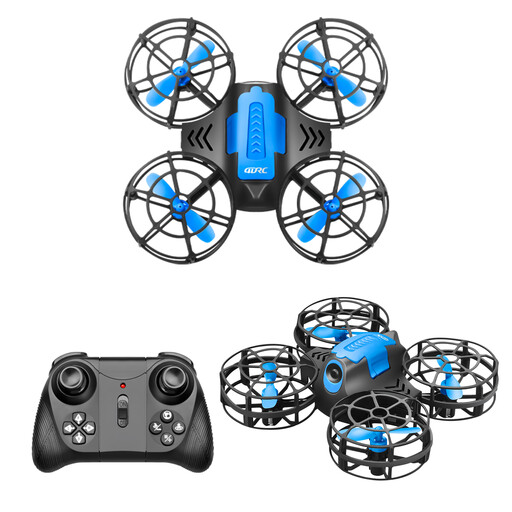
4DRC V18 Mini Drone for Kids and Beginners
Why we chose it: Ideal for a child or an adult who wants a stress-free introduction to flying. Its simplified functions (auto take-off/landing, altitude hold) let you focus on the essentials: learning the basic controls. It's an excellent alternative to a simple remote-controlled helicopter.
This model gets straight to the point, avoiding the trap of useless features by focusing on simplicity. Its feather-light weight places it in the least restrictive category. The pack includes two batteries, which sidesteps the single-battery pitfall.
Highly affordable, it's perfect for first flights and includes propeller guards for extra safety indoors.
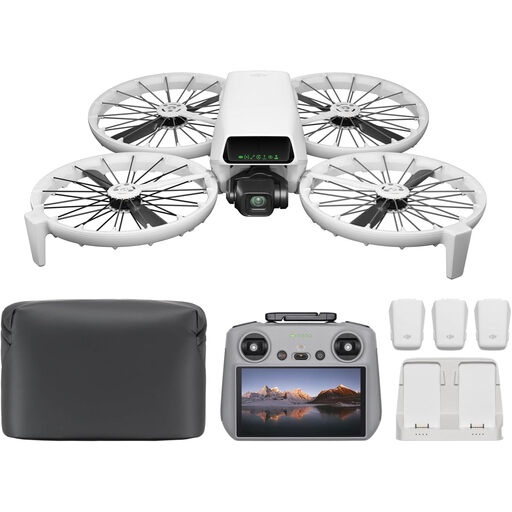
DJI Flip Fly More Combo with RC 2 Controller
Why we chose it: The ideal travel companion for capturing your adventures in high quality. Its compact size and weight of under 249 g make it ultra-practical to carry and use, while its 4K HDR camera ensures stunning images.
It ticks the most important box by coming in under the 249 g mark (C0 regulation), which radically simplifies its use. The "Fly More Combo" pack and its three batteries solve the battery life issue, a crucial point when travelling.
Combines an ideal regulatory weight with a high-performance 4K/60fps HDR camera and integrated propeller guards for greater peace of mind.
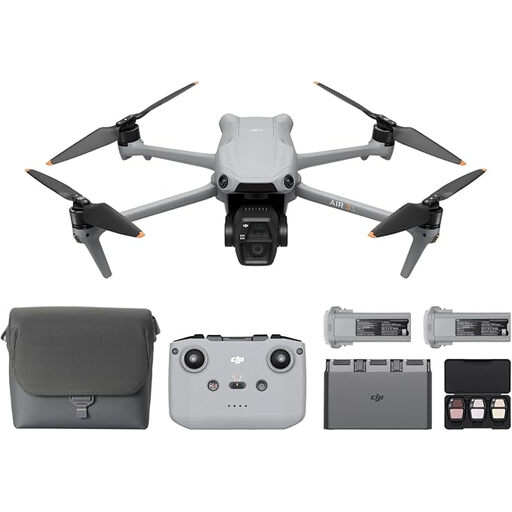
DJI Air 3S Fly More Combo (RC-N3)
Why we chose it: For amateur photographers and videographers who want more and are looking for truly superior image quality. Its large 1-inch CMOS sensor is a game-changer, especially for capturing sunsets or low-light scenes.
Here, the advanced features aren't a pitfall but a prerequisite. The Fly More Combo remains essential for maximising shooting time. Its weight (724 g) means you must comply with C1 regulations—a constraint a savvy user will gladly accept in exchange for such image quality.
Remarkable image quality thanks to the 1-inch CMOS sensor, a dual-camera system (wide-angle and telephoto), and omnidirectional obstacle sensing for safer flights.
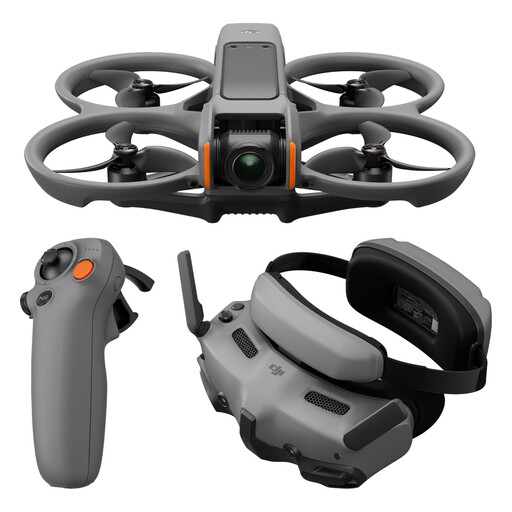
DJI Avata 2 Bundle
Why we chose it: Designed for adrenaline junkies and fans of unique flight sensations. The FPV (First-Person View) drone puts you in a virtual cockpit with its immersive headset, delivering an absolutely exhilarating experience of speed and agility.
This isn't an all-in-one drone, but a pure niche product. It thus avoids disappointing anyone looking for a conventional camera drone. The bundle includes everything you need to dive into the FPV experience (headset, motion controller).
Immersive FPV flight experience with an ultra-wide 155° field of view, intuitive motion control, and integrated propeller guards for enhanced safety.
Looking for other options?
We've put together a complete selection of products that meet our selection criteria and comply with UK and EU regulations.
Frequently Asked Questions About Drones
Do I need a permit to fly a drone in Europe?
Yes, and this is a crucial point. If your drone has a camera or weighs more than 250?g, you must register as an operator on the relevant government portal (like AlphaTango in France). For drones over 250?g, an online training course (followed by a test) is also mandatory.
Can I fly my drone anywhere?
Absolutely not. It is forbidden to fly over people, private property (without permission), and many sensitive or restricted zones (near airports, nuclear power plants, national parks...). The reference tool for knowing where you are allowed to fly is the official government map, such as France's Géoportail "UAS restrictions for Open category and model aircraft" map.
What is the lifespan of a drone battery?
A battery's lifespan is measured in charge cycles. For a quality battery like those from DJI, you can expect optimal performance for 200 to 300 cycles. Beyond that, its capacity will gradually decrease. To preserve it, a golden rule: store it at a 50-60% charge level and avoid extreme temperatures (both hot and cold).