
Fast Charger Buyer’s Guide: How to Choose the Right One
Low battery right before you head out? It's a classic scenario. Faced with this modern-day anxiety, the market is flooded with solutions, but finding the right fast charger can often feel like a real challenge. The gap between marketing promises and reality can be huge. This guide is here to separate fact from fiction and help you make a truly informed choice.
Before you dive in, let's review the most common pitfalls that lead to a disappointing purchase:
- The Total Power Mirage: Many chargers boast an appealing combined wattage (e.g., 100W), but this power is actually split between the different ports. The result: if you plug in multiple devices, the power allocated to each one drops drastically. Your laptop might only receive a fraction of the power needed for an efficient charge.
- Protocol Incompatibility: Buying a high-powered charger is no guarantee of fast charging. If the charger isn't compatible with your device's protocol (like Power Delivery for an iPhone or PPS for certain Samsung models), the charging speed will remain agonizingly slow. It's a wasted investment, more or less.
- Safety Risks: An unusually low price often hides dangerous compromises. The lack of certifications (like the CE mark), poor heat dissipation, or low-quality surge protection can not only damage your precious devices but also pose a genuine fire hazard.
Decoding the Essential Specs
To avoid these traps, you just need to master a few technical specifications. Once you understand them, you'll be able to choose a power adapter that perfectly meets your needs.
Power (in Watts) and Charging Protocols
Power, expressed in watts (W), determines the charging speed. But be careful, the advertised total wattage isn't the whole story. The decisive factor is the maximum power delivered per port.
- For a smartphone: 20 to 30W is generally enough for effective fast charging.
- For a tablet or ultraportable laptop: Aim for 45 to 65W.
- For a powerful laptop: A 100W charger (or more) is often essential for optimal charging, especially if you're using it at the same time.
Also, check for compatibility with your devices' protocols. The two most essential standards are:
- Power Delivery (PD): The standard adopted by Apple, Google, and most laptops via their USB-C charger port.
- Quick Charge (QC): Developed by Qualcomm, this protocol is widespread on Android devices.
GaN Technology: Smaller, More Efficient, Less Heat
Are you hearing more and more about GaN chargers (Gallium Nitride)? That's for good reason. This next-generation semiconductor material is replacing traditional silicon, and the advantages are very real:
- Compactness: For the same power output, GaN chargers are much smaller and lighter. A real plus for portability.
- Energy Efficiency: They waste less energy as heat. This means better performance and enhanced safety.
- Less Overheating: This improved thermal management extends the charger's lifespan and preserves your devices' batteries.
Connectivity: USB-C, Multi-Port, and Versatility
USB-C has established itself as the standard for fast charging, capable of delivering high power. Opting for a multi-port wall charger with several USB-C ports and perhaps a USB-A port for compatibility offers maximum flexibility. It's the ideal solution for powering your computer, phone, and earbuds simultaneously, and finally saying goodbye to the cable chaos on your desk or nightstand.
Our Top Charger Picks for Different User Profiles
Every user has specific needs. Here are a few recommended options, chosen for their relevance and performance in specific use cases.
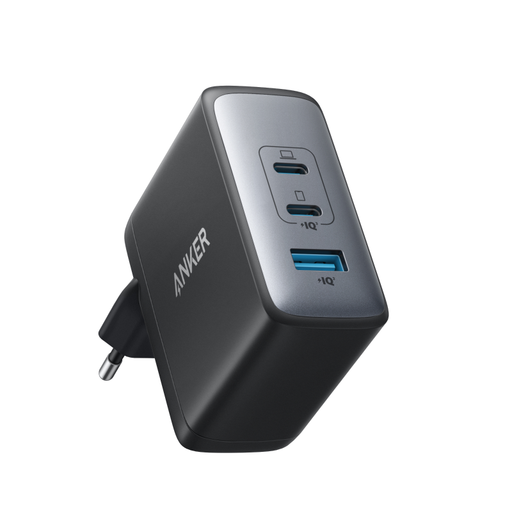
Anker 736 Wall Charger (100 W, 1A/2C Black)
Why we chose it: Ideal for those who travel with a laptop, smartphone, and other accessories. It conveniently replaces three chargers with a single, compact, and powerful solution.
This GaN charger can deliver up to 100W on a single USB-C port, enough to power most laptops on the market. Power is distributed intelligently when multiple devices are connected.
According to Anker, its GaN II technology allows for a 34% smaller size compared to a 96W Apple charger. Its 3 ports (2 USB-C, 1 USB-A) offer maximum versatility.
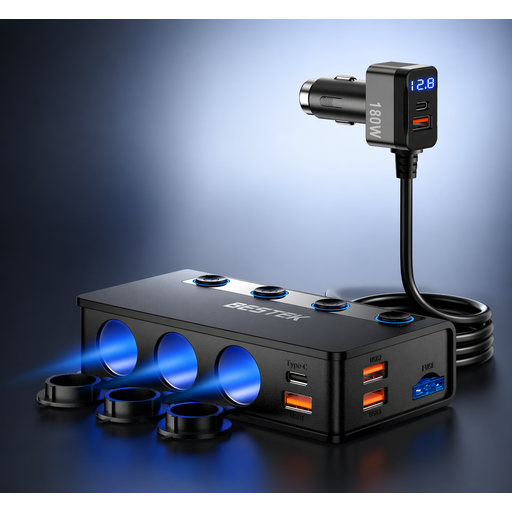
BESTEK 9-in-1 180W Cigarette Lighter Distributor
Why we chose it: Perfect for long family road trips or nomadic pros who need to power a multitude of devices: smartphones, GPS, a tablet, and even an electric cooler.
More than just a charger, this is a true power station for your car. It offers 180W of total power and dedicated ports (PD 65W, QC3.0) to ensure every device gets optimal power, without compromise.
It combines 6 fast-charging ports (USB-C and USB-A) and 3 cigarette lighter sockets, enough to charge up to 9 devices at once. The independent switches for each socket are a real plus for safety.
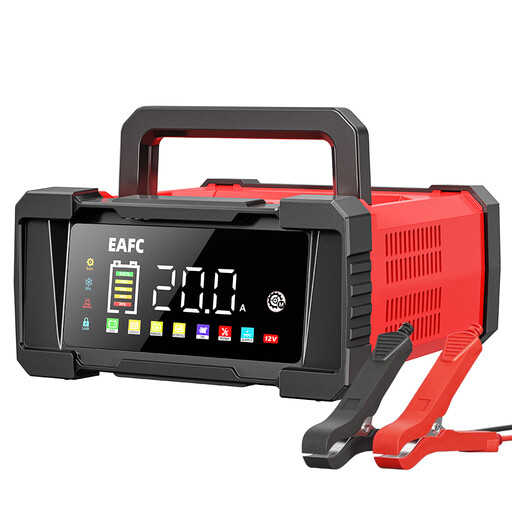
EAFC Portable Car Battery Charger for 12V 20A/24V 10A
Why we chose it: An indispensable tool for any car, motorcycle, boat, or lawnmower owner. It helps maintain the battery, especially during long periods of inactivity, thereby extending its lifespan.
Be aware, this is not a smartphone charger, but a specialized **car battery charger**. It offers modes tailored to different battery types (AGM, Gel, LiFePo4) and includes a pulse repair function to "revive" tired batteries.
Its versatility is its strong suit: 7 charging modes, a color screen displaying real-time status, and multiple protections. Its portable design with integrated cable storage makes it especially practical.
Looking for other models?
Discover our complete selection of chargers that meet our performance criteria and European safety standards.
Frequently Asked Questions About Fast Chargers
Can a fast charger damage my smartphone's battery?
No, if you use a certified, high-quality charger, there is no risk. Smartphones, tablets, and computers are equipped with chips that communicate with the charger to regulate the power received. Charging is very fast at the beginning (from 0 to 80%), then gradually slows down to preserve the battery's long-term health.
GaN vs. Traditional Charger: What's the Difference?
A GaN charger uses gallium nitride instead of silicon. This material allows for the creation of chargers that are smaller, lighter, and run cooler, while also being more energy-efficient. For power outputs of 65W or more, the difference in size and weight is striking, making it the ideal travel companion.
Do I need a special cable for fast charging?
Absolutely. The cable is an often-overlooked but essential link in the chain. To benefit from fast charging, especially above 60W, a high-quality cable is a must. An unsuitable cable can not only throttle the charging speed but also overheat. For high wattages, a certified USB-C to USB-C cable capable of handling that power is indispensable.