
LED Headlight Bulbs for Cars: How to Choose the Right Model Without Getting It Wrong
Replacing halogen bulbs with LED headlight bulbs for cars can provide whiter light and improve contrast perception at night. However, choosing the wrong reference could result in a poorly directed beam, trigger a warning light on the dashboard or simply mean the bulb will not fit inside the headlamp housing.
Before placing your order, three common mistakes should be avoided:
- Relying solely on the lumen count: the figures quoted by manufacturers are not always based on comparable measurement methods. A high number does not guarantee a well-shaped beam or better visibility on the road.
- Choosing the wrong bulb base: an H7 LED bulb does not automatically replace an H4, H1, H11 or HB3 9005. The bulb base shape, position of the LED chips and available space must all match your vehicle.
- Overlooking electronics and regulations: some vehicles monitor bulb power consumption. A CANBUS-compatible model may reduce error messages, but it does not guarantee that no warning will appear on every vehicle. You should also check approval requirements and the conditions for use on public roads.
Parameters to check before buying
1. The bulb base and bulb function
Check your vehicle’s manual or remove the existing bulb to identify its reference. The most common formats include:
- H1: often used for main beam headlights or for a specific function depending on the headlamp housing.
- H4: a dual-function bulb that combines dipped and main beam in the same unit.
- H7: very widely used for dipped or main beam headlights.
- H11: frequently used for fog lights, although the configuration varies depending on the vehicle.
- HB3 9005: generally associated with certain main beam headlights.
- HIR2 9012: a distinct format that should not be confused with H7 or H11.
- D1S LED and D2S LED: designed to replace certain HID systems, rather than standard halogen bulbs.
A plug-and-play headlight bulb makes installation easier, but ‘without an adapter’ does not mean ‘universal’. In particular, check the depth of the housing, the space beneath the rear cover and the fixing system.
2. The light beam matters more than the stated power
With automotive LED lighting at 6 000 K or 6 500 K, the colour temperature produces a cool white light. This can alter how signs and obstacles appear, but a higher colour temperature does not mean the beam will be better adjusted.
Look for information about 1:1 design, LED chip alignment and beam distribution. Once the bulbs have been fitted, check the headlamp height. A very powerful LED light that is positioned incorrectly can dazzle oncoming drivers.
Claims such as ‘300%’, ‘600%’ or ‘800% brighter’ are primarily marketing arguments. They are no substitute for independent measurements or comparisons carried out under the same conditions.
3. Cooling and electrical compatibility
LEDs generate heat around the chips. A model fitted with a fan, an aluminium heat sink or a combination of both needs sufficient space inside the headlamp. The integrated fan may also produce a slight noise and adds a mechanical part that could wear out.
The IP65, IP67 or IP68 ratings refer to claimed resistance to dust and water under certain conditions. They do not remove the need to refit the headlamp cover and seals correctly.
Finally, an LED bulb with a cooling system and integrated CANBUS circuit may reduce flickering or warning messages, but it will not always eliminate them on the most sensitive vehicles. Volkswagen, Mercedes-Benz and BMW models, as well as certain commercial vehicles, may require an additional decoder, depending on the product information and the vehicle’s electrical architecture.
Our selection for different uses
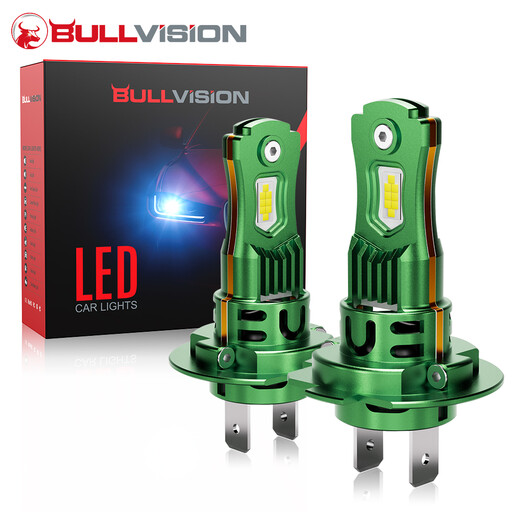
Bullvision H7 H4 H11 9005 9006 headlight bulbs
Why this choice suits this profile : This kit covers several common formats and promises plug-and-play installation. It is a practical solution for a first conversion, provided you have confirmed the reference compatible with your vehicle.
The product information states that the format is similar to the original bulb and specifies that a CANBUS decoder may be required for certain sensitive vehicles.
Stated colour temperature of 6 000 K, integrated fan and several bulb bases available within the same range.
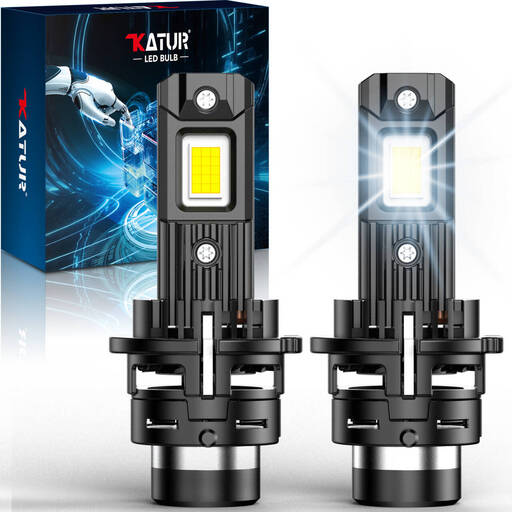
KATUR D2S LED bulbs
Why this choice suits this profile : This model is aimed at owners of vehicles originally fitted with HID D2S systems who want to keep this format while switching to a stated 6 500 K white light.
The product information clearly states that this is only a replacement for a D2S HID housing, not for a halogen bulb or another headlamp assembly.
Stated 1:1 format, rapid start-up, cooling fan and claimed CANBUS compatibility.
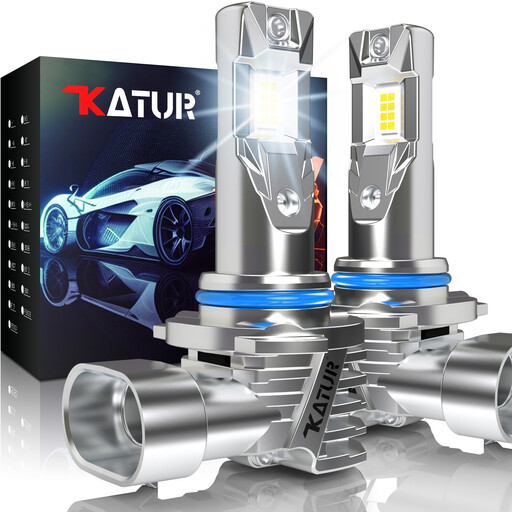
KATUR HIR2 9012 LED headlight bulbs
Why this choice suits this profile : Drivers, motorcyclists and SUV owners whose vehicle uses an HIR2/9012 base can benefit from this compact model, designed for tight housings.
The product information clearly states that it does not replace H1, H4, H7 or H11 formats, or HID systems using a different reference.
Stated fanless design, miniature format, water protection and direct installation.
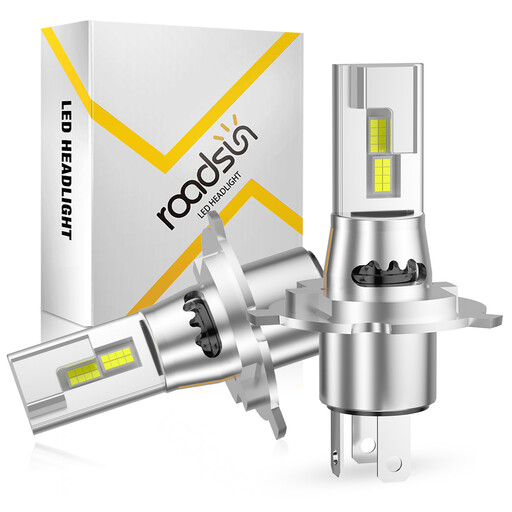
Roadsun H4/9003/HB2 bulbs — dipped and main beam
Why this choice suits this profile : The H4 dual beam is suitable for cars and motorcycles that use a single bulb for dipped and main beam.
The H4/9003/HB2 format is clearly specified, reducing the risk of ordering a single-function bulb for a dual-beam headlamp.
The listing mentions a fan spinning at 16 000 rpm, an aluminium housing, a colour temperature of 6 500 K and IP68 protection.
Looking for more options ?
We have brought together a complete, real-time selection of products that meet these strict criteria and European safety requirements.
Home installation: essential checks
- Switch off the headlights, remove the key and allow the bulbs to cool.
- Compare the connector, locating tab and length with those of the old bulb.
- Avoid touching the LED chips with your fingers.
- Check that the fan or heat sink does not press against the cover.
- Refit the seal and rear cover correctly to preserve watertightness.
- Switch on the lights, check whether a CANBUS message appears and have the beam adjusted if necessary.
For LED fog light bulbs, caution is still essential: a beam that is too high or too diffuse can inconvenience other road users, particularly in rain or fog.
Frequently asked questions
Are LED bulbs compatible with all car headlights?
No. Compatibility depends on the bulb base, headlamp optics, electrical supply and the vehicle’s monitoring system. Check the reference of the original bulb before choosing an H7, H4, H1, H11, HB3 9005, HIR2 9012, D1S LED or D2S LED.
How long does an automotive LED bulb last?
Product listings often state a lifespan of between 50 000 and 60 000 hours. However, this figure depends on temperature, the cooling system, vibrations and actual operating conditions. It is not a guarantee that applies in every situation.
Should you choose a 6 000 K or 6 500 K bulb?
6 000 K generally produces a cool white light, while 6 500 K tends towards a more bluish white. The choice depends on the appearance you want and your vehicle’s configuration. In every case, product compliance and correct beam adjustment are more important than colour temperature alone.