
Low-Profile Hydraulic Jack Buyer’s Guide for Lowered Cars
Sports cars, lowered sedans, or sharp coupés: driving pleasure is one thing, but maintenance is another. The simplest task, like a wheel change, can turn into a nightmare when the factory jack proves useless and a standard trolley jack won't fit under the chassis.
As automotive experts and enthusiasts, our mission is to help you avoid these hassles. This guide is designed to help you choose the perfect low-profile hydraulic jack for your vehicle and needs, based on clear technical criteria and real-world scenarios.
How to Choose the Right Low-Profile Hydraulic Jack?
Before diving into our top picks, let's review the three essential criteria that will guide your choice.
1. Lifting Capacity and Height
Expressed in tons, lifting capacity is the first thing to check. For safety, we recommend choosing a jack that can support at least 75% of the vehicle's total weight. For example, for a 2-ton car, a 1.5-ton model will suffice, as you never lift the entire car at once. For heavier vehicles like SUVs or vans, a 3-ton jack will provide welcome peace of mind.
Height is the second crucial factor. Two measurements require close attention:
- Minimum Height: This is THE defining criterion for a lowered car. It must be less than your vehicle's ground clearance. Good low-profile models come in under 100 mm, with some even below 90 mm.
- Maximum Lifting Height: It must be high enough for the wheel to clear the ground, allowing you to work comfortably.
2. Materials and Portability: Steel vs. Aluminium
The construction material directly impacts the jack's weight, manoeuvrability, and lifespan.
- Steel: Robust and cost-effective, this is the choice for durability. Its significant weight makes it better suited for stationary use in a garage or workshop.
- Aluminium: An aluminium jack is a featherweight by comparison, making it ideal for transport. It's the top choice for track days or for keeping a reliable tool in your trunk.
3. Safety First: CE Certification
When it comes to lifting equipment, safety is not optional. Insist on a model that is a CE-certified jack and, ideally, compliant with the EN 1494 standard. This dual certification ensures the product has undergone rigorous stress tests and meets European safety standards. And a life-saving reminder: NEVER use a jack alone to support a vehicle. Jack stands are mandatory.
Recommended Low-Profile Hydraulic Jack Picks
Here are three options that cater to different needs, from the DIY mechanic to the track day enthusiast.
TCE 2.5-Ton Hydraulic Trolley Jack: Robustness for Regular Use
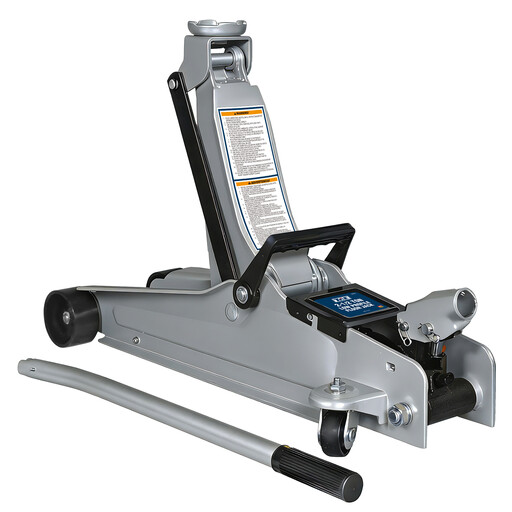
Why it stands out: This steel model is the perfect balance: it combines a comfortable 2.5-ton lifting capacity with a very low profile of 85 mm. Its robust construction makes it a reliable ally for regular maintenance in the garage.
Key Features:
- 2.5-ton load capacity, compatible with most sedans, SUVs, and MPVs.
- Adjustable lifting height from 85 mm to 380 mm.
- High-strength steel structure for enhanced durability.
- EN 1494 + CE certified, ensuring safe operation.
Who is it for? Perfect for the enthusiast who maintains their sports car at home but also needs a versatile tool to handle the family SUV.
TCE 1.5-Ton Aluminium Hydraulic Jack: Lightweight for Mobility
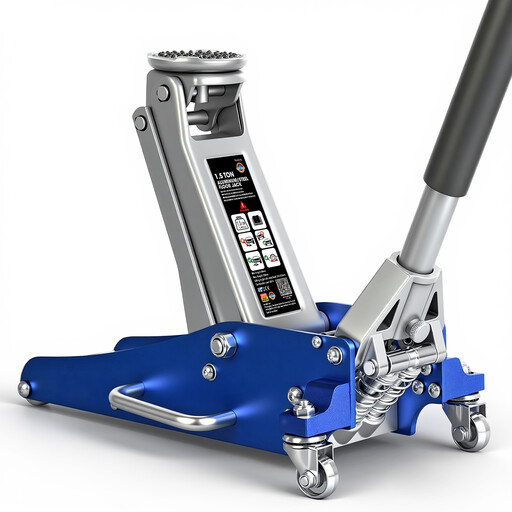
Why it stands out: Its key advantage? Its weight. At just 14.3 kg, this aluminium jack is built for mobility. Its dual-pump system provides a rapid lift, a decisive advantage on the track or for an emergency roadside repair.
Key Features:
- Aluminium alloy structure, for a total weight of approximately 14.3 kg.
- 1.5-ton load capacity, perfect for sports cars and coupés.
- Lifting height from 90 mm to 358 mm.
- Rapid lift dual-pump system.
- EN 1494 + CE certified.
Who is it for? The ideal companion for track day enthusiasts, rally participants, or simply for those who want a high-performance, portable jack for unexpected situations.
TCE 3-Ton Aluminium Hydraulic Jack: Versatility for All Vehicles
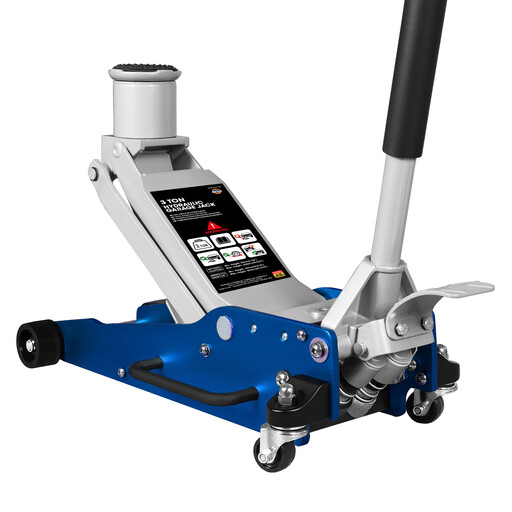
Why it stands out: This is the ultimate all-rounder. It combines an ultra-low 85 mm profile, perfect for sports cars, with a powerful 3-ton lifting capacity. Thanks to its included saddle extension, it lifts large SUVs and vans without breaking a sweat. All this in an aluminium chassis that keeps its weight down despite its power.
Key Features:
- High load capacity of 3 tons.
- Dual lifting mode: height from 85 to 465 mm in standard mode, and from 161 to 541 mm with the saddle extension.
- Quick, tool-free mode switching.
- Aluminium alloy body and rapid lift dual-pump system.
- EN 1494 + CE certified.
Who is it for? For the DIY mechanic who refuses to compromise, or for the owner of a diverse garage (sports car, SUV, van). It's the ultimate choice for versatility, without sacrificing performance or safety.
Can't Find What You're Looking For?
Our selection covers the most common needs, but your situation may be unique. If you require a different lifting capacity, a specific height, or other features, the options don't end here.
We invite you to explore our full range of lifting tools to discover other options and find the equipment that perfectly matches your requirements.
Frequently Asked Questions About Low-Profile Jacks
What lifting capacity should I choose for my car?
For safe use, aim for a capacity equal to or greater than 75% of your vehicle's total weight. For example, for a 1.8-ton car, a 1.5-ton (1500 kg) jack is a solid baseline (75% of 1800 kg = 1350 kg). When in doubt, always opt for the higher capacity.
Is an aluminium jack as safe as a steel jack?
Yes, provided it is properly certified. The material (steel or aluminium) isn't everything: design, manufacturing quality, and adherence to standards are paramount. A CE and EN 1494 certified aluminium jack has passed the same strength and safety tests as an equivalent steel model.
Can I leave my car on a hydraulic jack while working underneath it?
No, absolutely never. A hydraulic jack is a lifting device, not a support stand. Once the vehicle is at the desired height, it is imperative to secure it with jack stands rated for its weight before starting any work. Your safety is priceless.