
Memory Card Buying Guide: How to Choose the Right One
When your memory card gets full or too slow, it's a disaster?: your photoshoot is ruined, video recording crashes, and your smartphone starts to lag. In the jungle of spec sheets and marketing promises, it's easy to make the wrong choice. Our guide is here to help you cut through the noise and choose THE memory card you need, while avoiding the most common pitfalls.
The 3 Mistakes to Avoid at All Costs
Before you even start comparing models, let's review the common traps that lead to disappointment (and unnecessary expenses).
- Focusing only on capacity (GB)?: Finding a 256GB memory card for a rock-bottom price might seem like the deal of the century. But if its write speed is lagging, expect choppy 4K videos and a sluggish smartphone. Speed is just as crucial as storage space.
- Ignoring endurance?: A standard memory card isn't designed for continuous recording. Using one in a dash cam memory card or a security camera is a death sentence, and it will inevitably fail at the worst possible moment. For this kind of use, it's essential to opt for "high-endurance" models.
- Confusing read and write speeds?: This is a classic marketing trick. Manufacturers love to advertise the read speed (in MB/s), which is always higher and more impressive. However, for capturing burst photos or recording video, it's the write speed that's the critical factor. A write speed that's too low is the main culprit behind recordings that cut out unexpectedly.
Decoding the Tech Jargon to Make the Right Purchase
To make the right choice, you need to scrutinize three criteria. They determine both the performance and compatibility of your future memory card.
1. Format?: SD vs. microSD
This is the most obvious criterion, but a careless mistake is easily made.
- SD Card (Secure Digital)?: The larger, standard format found in most cameras (DSLRs, mirrorless) and camcorders.
- microSD Card?: The miniature format, essential for smartphones, drones, portable consoles (especially the Nintendo Switch), dash cams, and action cameras. Good to know?: most microSD cards come with an adapter to make them compatible with SD card readers.
2. Capacity?: SDHC vs. SDXC
Capacity, of course, defines how many files you can store, but it's primarily linked to a standard that determines compatibility.
- SDHC (High Capacity)?: From 4?GB to 32?GB.
- SDXC (Extended Capacity)?: From 64?GB to 2?TB. A 128GB memory card is therefore an SDXC card.
The key thing to check?: Older devices are sometimes only compatible with SDHC cards. Before investing in a high-capacity card, always check the maximum capacity supported by your device (smartphone, camera, etc.) in its manual or on the manufacturer's website.
3. Speed Classes?: The Game-Changing Factor
This is where it all comes down to performance. Several logos appear on the cards, each corresponding to a specific use.
- Video Speed Class (V)?: This is the most recent and clearest indicator for video. It guarantees a minimum sustained write speed. For a 4K SD card, a V30 class (30 MB/s minimum write speed) is the bare minimum. V60 and V90 classes are reserved for professionals shooting in 8K or at extreme bitrates.
- UHS Speed Class (U)?: Often displayed alongside the V class, U1 is equivalent to 10 MB/s and U3 to 30 MB/s. A U3 card is therefore the equivalent of a V30 in terms of guaranteed minimum write speed.
- Application Performance Class (A)?: Essential for smartphones. A card certified A1 or A2 is optimized to quickly store and launch applications, which significantly improves your phone's responsiveness.
Top Memory Card Recommendations
Instead of an endless catalog, we've selected cards for specific use cases. The right card for every user—no unpleasant surprises, guaranteed.
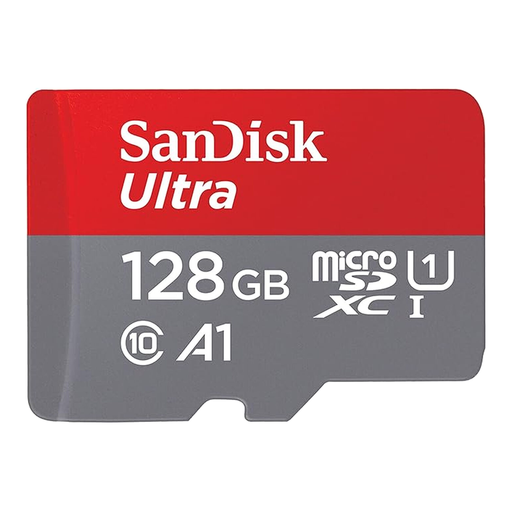
SanDisk Ultra microSDXC 128GB + SD Adapter
Why we chose it : The perfect solution for expanding an Android smartphone's storage, holding photos, Full HD videos, and music. Its A1 certification ensures that apps installed on the card launch quickly.
It goes beyond mere capacity by guaranteeing Application Performance (A1), an often-overlooked spec, to put an end to smartphone slowdowns.
An excellent price-to-capacity ratio, speeds sufficient for everyday use, and great versatility thanks to the included SD adapter.
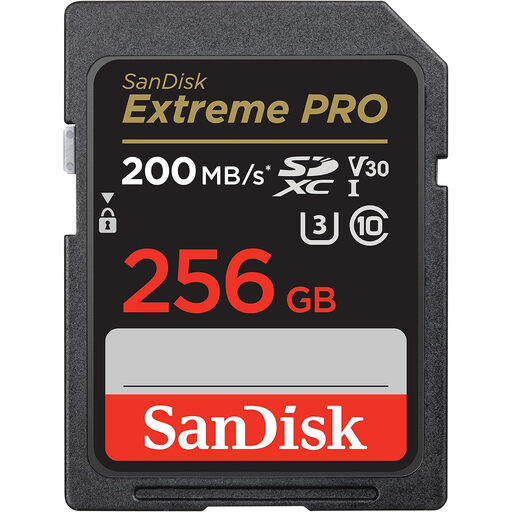
SanDisk Extreme PRO 256GB SDXC Memory Card
Why we chose it : Built for DSLRs and mirrorless cameras, this camera memory card offers high write speeds (up to 140 MB/s) and U3/V30 certifications. It's everything you need to ensure perfectly smooth 4K UHD recordings and burst shooting that never slows down.
It focuses on write speed and certified classes (U3/V30), which are crucial for 4K, where consumer-grade cards would give up.
Its read speeds (up to 200 MB/s) drastically reduce file transfer times, a precious time-saver in post-production.
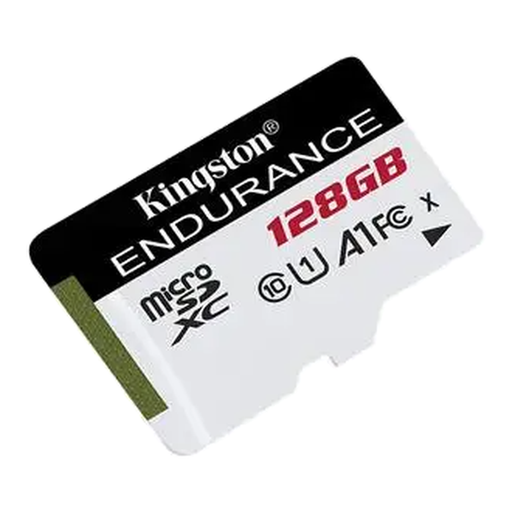
Kingston Technology High Endurance 128GB MicroSD
Why we chose it : This high-endurance memory card is specifically designed to withstand the constant write and rewrite cycles of dash cams and security cameras. It guarantees reliable 24/7 loop recording.
It targets the weak point of classic cards : durability. Unlike a standard model, it's built to last and won't fail after just a few months of intensive recording.
Rock-solid reliability and resistance to extreme conditions (heat, cold), ensuring that crucial footage is always safely recorded.
Looking for other options ?
Explore our full selection of products that meet our demanding specifications.
Frequently Asked Questions (FAQ)
1. How do I format a new memory card? The best practice is to always format a new memory card directly in the device that will use it (camera, smartphone, etc.), not on a computer. This ensures perfect compatibility and optimal performance. The option is usually found in the "Settings" or "Setup" menu of your device.
2. Is an SDXC card compatible with my old device? Not always. Devices made before 2010 are often only compatible with SD (up to 2?GB) or SDHC (up to 32?GB) cards. Trying to insert an SDXC card (64?GB and up) will result in an error. To be sure, check your device's manual or the manufacturer's website.
3. What is the lifespan of a high-endurance memory card? Its lifespan is typically expressed in hours of recording. For example, a 128?GB card might be rated for up to 20,000 hours of Full HD recording. For a dash cam, this represents several years of normal use before the first signs of wear might appear.