
LED Strip Light Buyer’s Guide: How to Avoid Common Pitfalls
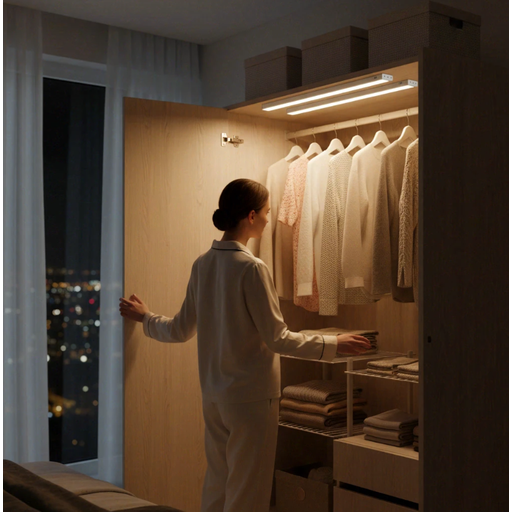
Navigating a dark hallway, finding an outfit in a wardrobe, or grabbing a midnight snack without waking the whole house... For all these everyday situations, the motion-sensor LED strip light is the smart and simple solution. Easy to install and energy-efficient, it provides light exactly where you need it, only when you need it.
But there's a catch: the market is flooded with models making tempting promises, and it's easy to end up with a disappointing product. To ensure a good idea doesn't turn into a headache, here are the three pitfalls you absolutely must know about before you buy.
- Phantom Battery Life?: Many models promise weeks of worry-free use but actually need a recharge after just a few days. The weak link? An undersized battery.
- The Temperamental Sensor?: A sensor that's triggered by a fly or, worse, only detects you after you've already passed by... The result: a battery that drains for no reason or a light that's completely useless.
- A Mount in Name Only?: The infamous adhesive light that falls off after three weeks is a classic problem. This is usually due to a low-quality adhesive that can't handle the humidity of a kitchen or the temperature changes in a wardrobe.
To help you see things more clearly, we've broken down the features that truly make a difference in day-to-day use.
The Criteria That Really Matter for Reliable Lighting
Choosing the right closet light bar goes beyond its design. Three technical points should be closely monitored to ensure a practical and long-lasting purchase.
1. Battery Life and Charging Type
The whole point of a wireless light is to set it and forget it. Its battery life is therefore the most critical factor. This depends directly on the battery's capacity, measured in milliampere-hours (mAh).
- Battery Capacity?: For moderate use (a few activations per day), a battery of at least 500 mAh is the minimum. For high-traffic areas, aim for 800 mAh or more.
- Charging Type?: Most models are USB accent lights. Opt for those with USB-C ports, which are more modern and reversible, for simplified charging. Being able to recharge the light with a standard phone charger is a real bonus.
2. Motion Detector (PIR) Reliability
The passive infrared (PIR) sensor is the brains of the strip light. Its effectiveness and battery life depend on its reliability.
- Range and Detection Angle?: A range of 3 to 5 metres with a 120-degree angle is a standard that covers most needs. Check that these specifications match the layout of your space.
- Light Sensor?: The smartest models include a dusk-to-dawn sensor. This means the light only activates in the dark, preventing battery waste during the day.
3. Mounting System and Materials
No drills, no screws: that's one of the biggest advantages of these lights. The quality of the mounting system is therefore crucial.
- Magnetic Mounting?: This is by far the smartest solution. An adhesive metal plate sticks to the surface, and the magnetised light attaches to it. This allows you to remove it in a flash for recharging without ever touching the adhesive.
- Materials?: ABS plastic models are lightweight and budget-friendly. Those made of aluminium dissipate heat better and inspire more confidence in terms of durability—a significant plus for a cabinet or wardrobe light that's used every day.
Our Top Product Recommendations
Instead of an endless catalogue, here is a selection of products that tick all the boxes, each designed for a specific need.
Ultra-Slim 20 cm LED Strip Lights with PIR Sensor, 2-Pack
Their key feature : This pack is perfect for outfitting multiple areas on a budget: drawers, kitchen cabinets, a small wardrobe... Their compact form factor makes them nearly invisible.
With 800 mAh per strip, battery life is solid. No more constant-recharging anxiety. The choice between 3 colour temperatures is a welcome bonus at this price point.
Its value for money. Lighting up two areas for the price of one is a smart move.
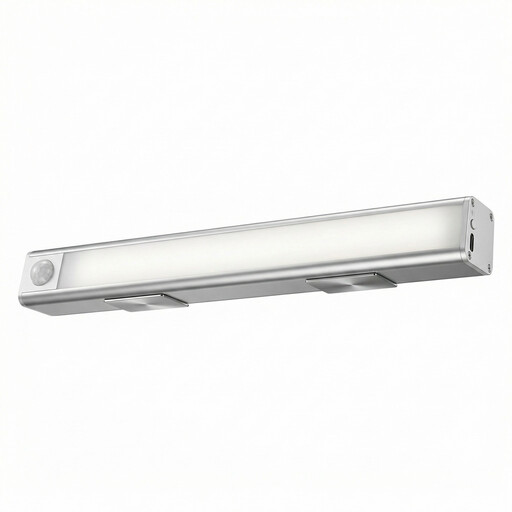
KYF 60 cm Rechargeable LED Strip Light with Detector
Their key feature : At 60 cm long, this strip light casts a wide, even glow, perfect for a hallway, a large countertop, or an entire wardrobe. Goodbye, dark spots.
Its aluminium and ABS construction and strong magnetic mount tackle the problem of failing adhesives. The modern, reversible USB-C port simplifies recharging.
Its light output (190 lumens) spread over 60 cm and the choice of colour temperature (warm/cool) make it a highly versatile model.
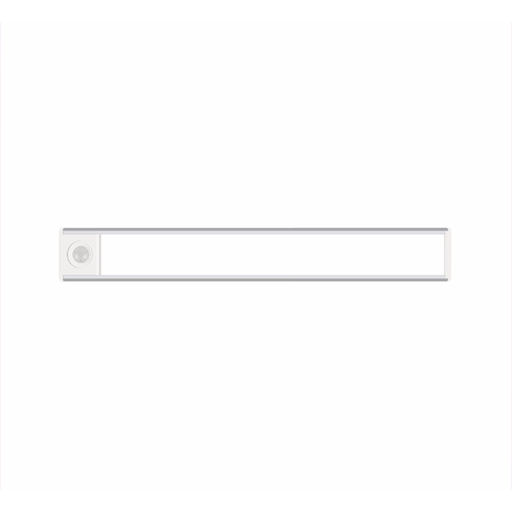
KYF 30 cm Rechargeable LED Strip Light
Their key feature : Its 30 cm length is the ultimate all-rounder size. Compact enough for a cabinet, yet long enough for a countertop or a stair tread. Its slim aluminium body combines discretion with durability.
Its magnetic mounting system is the perfect antidote to the low-quality adhesive trap. Recharging the light becomes a breeze, without any risk of tearing it off or damaging furniture.
Its versatility. Its size and build quality make it a true Swiss Army knife: perfect as a motion-activated night light in a child's room or as task lighting in a garage.
Need Even More Options?
Explore our full selection of products that meet our quality criteria and current safety standards.
Frequently Asked Questions
What is the lifespan of a rechargeable LED strip light? It depends on two things. On one hand, the LEDs themselves have a lifespan of tens of thousands of hours, so they are almost never the problem. On the other hand, there's the battery, which typically withstands several hundred charge cycles. In practical terms, this translates to several years of reliable service with normal use.
Will installing an adhesive light damage my walls or furniture? The risk is minimal if you take a few precautions. Make sure the surface is clean, dry, and smooth before applying the strip. To remove it without damage, gently heat the adhesive with a hairdryer to soften it, then pull very slowly to avoid stripping paint or varnish.
How long does it take to fully charge an LED strip light? It all depends on the battery capacity (in mAh) and the power of your charger. On average, expect between 1.5 and 3 hours for a full charge via a USB port. An indicator light (often red) will turn green or switch off to let you know the battery is full.