
Portable Bluetooth Speaker Guide: Avoid Pitfalls and Choose Wisely
The portable Bluetooth speaker market is a jungle. Between tempting marketing promises and overwhelming technical specs, finding the perfect model for your needs can feel like an uphill battle. As a product expert at Joybuy, my mission is to guide you. Let's break down the criteria that truly matter so you can make an informed choice—and, most importantly, have no regrets.
The 3 Pitfalls to Avoid Before Buying Your Portable Speaker
Before you even start comparing models, let's review the common mistakes that almost always lead to disappointment.
- The Myth of Absolute Waterproofing: Many speakers claim to be "waterproof," but this single word hides a wide range of realities. A model that resists splashes (light rain, poolside) is absolutely not designed to be submerged. Paying a premium for an immersion-proof certification (like IPX7) is therefore pointless if you just plan to use it at the park or in your garden.
- Advertised Battery Life Is a Purely Theoretical Figure: Manufacturers love to advertise a portable speaker with record-breaking battery life, but this figure is almost always achieved under lab conditions (volume at 50%, no extra features). In the real world, at full volume and with light effects activated, expect to cut this time in half. The only reliable indicator? The battery's capacity, expressed in milliampere-hours (mAh).
- Wattage Doesn't Equal Sound Quality: A powerful outdoor speaker isn't just about a big number in watts. A poorly managed 60W of power will result in sound that distorts and crackles, whereas a well-designed 20W model with good drivers and a passive radiator for bass will offer a much richer and more balanced listening experience.
The Real Technical Specs to Check Before You Buy
To get it right, focus on these few objective characteristics. They define a speaker's true quality and its suitability for your use case.
1. The IP Rating: Your Guarantee of Durability
The Ingress Protection (IP) rating is an international standard that assesses a device's resistance to dust and water. For a waterproof wireless speaker, the second digit is crucial: it indicates protection against liquids.
- IPX5: Protected against low-pressure water jets from all directions. Sufficient for use in light rain or near a pool.
- IPX6: Protected against powerful water jets. Ideal for the beach or water activities where splashes are stronger.
- IPX7: Protected against temporary immersion (up to 1 metre deep for 30 minutes). Useful if you might accidentally drop the speaker in water.
2. Battery Life and Connectivity: The Essentials of Portability
A truly portable speaker should be able to go everywhere with you, without limitations.
- Battery Capacity: Aim for at least 2000 mAh for decent battery life. Models over 3500 mAh provide comfortable endurance to last a full day.
- Charging Port: Prioritise USB-C, which has become the standard. It ensures faster charging and saves you from juggling multiple cables if your smartphone or tablet already uses it.
- Handy Extras: Some models include a power bank function to recharge your phone. A real bonus for a travel Bluetooth speaker.
3. Sound Quality: Far Beyond Just Watts
Audio performance primarily depends on the speaker's internal architecture.
- Drivers and Passive Radiators: A good speaker combines drivers for highs/mids with one or more passive radiators to boost the bass. This combination gives the sound depth and body.
- TWS (True Wireless Stereo) Function: This technology allows you to pair two identical speakers to create a true stereo system, with separation of the left and right channels. The sound instantly becomes more expansive and immersive. Ideal for livening up a party or even watching a movie outdoors.
Our Portable Bluetooth Speaker Picks
Rather than an endless list, we've selected models tailored for specific user profiles, keeping the pitfalls to avoid in mind.
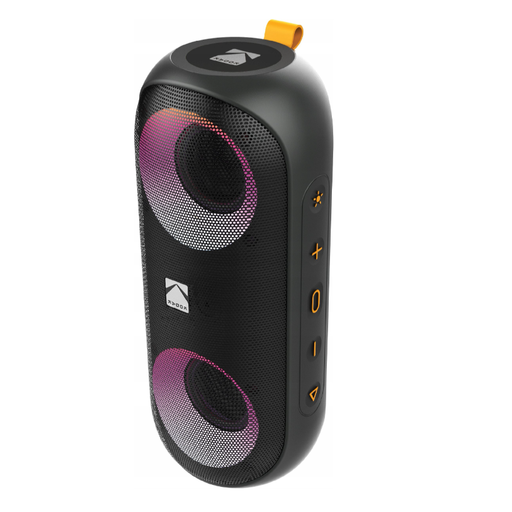
Kodak Wireless Portable Speaker, 2x10W, IPX6
THE IDEAL USER: This is the reliable everyday audio companion, just as at home during a picnic, a day at the beach, or in the garden. Its format offers the perfect balance between portability and sound performance.
Its IPX6 certification provides solid protection against powerful water jets—far more serious than simple splash resistance—without the extra cost of an often unnecessary immersion certification.
Its 20W, supported by a passive bass radiator, delivers rich, balanced sound for its size. The 2000 mAh battery ensures solid battery life for daily use.
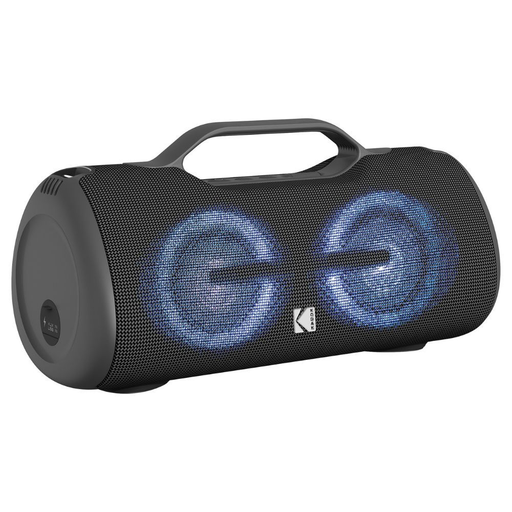
Kodak Portable Wireless Speaker, 60W, IPX5
THE IDEAL USER: Designed for those who love to get the party started, whether at a barbecue, a garden party, or a get-together with friends. Its power is built to fill an open space, and its features make it a true Swiss Army knife.
It doesn't just boast 60W. It masters it with a DSP (Digital Signal Processor) and 3 EQ modes that adapt the sound and prevent distortion from crashing the party, even at full volume.
Its 3600 mAh battery gives it 8 to 10 hours of runtime and can even charge your smartphone. The TWS function lets you pair two speakers for impressive stereo sound.
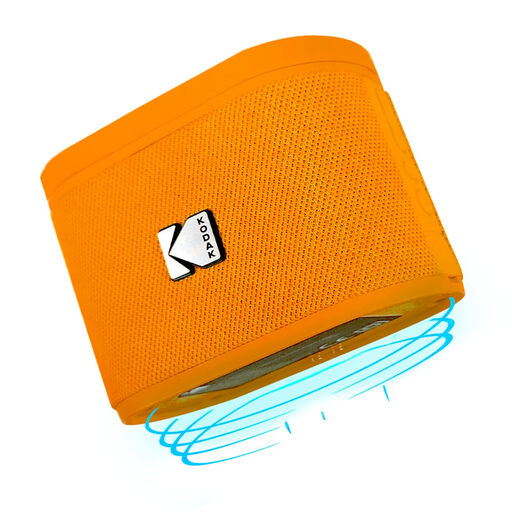
Kodak Soundbrix Bluetooth Speaker, Orange
THE IDEAL USER: The perfect speaker for those who prioritise compactness above all else. Small enough to fit in a pocket, it's ideal for travel, hiking, or providing sound for a desk without the clutter. Its modularity is its secret weapon.
It sidesteps the power trap by betting everything on modularity. Instead of promising the impossible for its size, it allows you to connect up to 100 speakers together to scale the sound to your needs.
Its magnetic design lets you attach it to any metal surface. Weighing in at just 181g, it's a true featherweight that can still deliver massive sound thanks to its multi-unit connectivity.
Looking for other options?
We've put together a complete selection of products that meet our demanding selection criteria and current safety standards.
Frequently Asked Questions
How many watts should I choose for a portable Bluetooth speaker?
For personal listening or in small groups (picnics, office), 5 to 20 watts is more than enough. To liven up an outdoor party or fill a large room with sound, aim for models between 30 and 60 watts, ensuring they include tools to shape the sound (EQ, DSP).
What does the TWS function on a speaker mean?
TWS stands for True Wireless Stereo. It's a technology that allows you to connect two identical speakers without any wires. One handles the left audio channel, and the other handles the right. The result? A much wider and more immersive soundstage, similar to that of a traditional hi-fi system.
How can I extend my speaker's battery life?
A few simple steps can make a difference:
- Avoid frequent full discharges.
- Do not expose it to extreme temperatures (very hot or very cold).
- Lower the listening volume when possible.
- Disable extra features (like LED light shows) to maximise runtime.