
Portable Outdoor Projector Screen in 2026: How to Choose the Right Model for Your Movie Nights
Setting up a cinema in the garden, hosting a movie night with friends or turning a room into a gaming space may seem straightforward. Yet choosing the right portable outdoor projector screen can quickly become complicated. A screen that is too small, difficult to tension or marked by creases can seriously detract from the viewing experience.
Here are the key criteria to consider before buying, along with a selection of models suited to the main use cases in France.
Common Pitfalls to Avoid Before Buying
1. Confusing Diagonal Size with the Actual Viewing Surface
The “100-inch” or “120-inch” specification refers to the image diagonal, not its width. In 16:9 format, a 100-inch screen is generally around 2.21 m wide, while a 120-inch model reaches approximately 2.66 m. You should therefore check the space actually available in your garden, living room or multipurpose area.
An oversized screen may also force you to position the projector considerably farther away. Check its throw distance before placing your order.
2. Relying Solely on the “Wrinkle-Free” Label
A foldable screen may retain a few marks after transportation. The wrinkle-free projector screen designation indicates that its design or material helps limit this issue, but it does not guarantee a perfectly taut surface in every situation.
Systems with ropes and hooks distribute tension more evenly along the sides. They are particularly useful outdoors, where a screen that is merely suspended can move or develop waves.
3. Overlooking Wind and Weather Conditions
An indoor-outdoor projector screen is not necessarily designed to remain outside. Gusts can pull on the attachment points, bring the screen down or damage the projector. It is best to dismantle the setup after each session and store it away from rain, snow and prolonged exposure to sunlight.
Key Specifications to Check Before Buying
Format and Dimensions
The 16:9 format is suitable for movies, series, consoles and most current video content. For family use, a 100-inch projector screen offers a good balance between immersion and footprint. The 120-inch size is better suited to large gardens, events and bigger audiences.
A 4K projector screen does not magically turn a video source into 4K. This designation may simply mean that the screen is suitable for displaying a highly detailed image. The final resolution also depends on the projector, source and viewing distance.
Front and Rear Projection
A double-sided projector screen can be used with the projector positioned either in front of or behind the screen. This flexibility is particularly practical in a garden when the device needs to remain behind the screen to keep the viewing area clear.
You should still take the available brightness into account and avoid direct light sources. Outdoors, the experience will generally be much more enjoyable after nightfall.
Material, Care and Mounting
Flexible polyester is widely used for foldable screens. A washable model can be cleaned gently, following the seller’s instructions. Avoid ironing, harsh cleaning products and any sharp objects.
For installation, check whether ropes, hooks, eyelets or a frame are included. The supplied accessories make setup easier, but the overall stability also depends on the support used: a wall, tree, posts or fence. Securing the screen evenly at every designated point helps limit movement and rippling.
Which Option Best Matches Your Usage Profile?
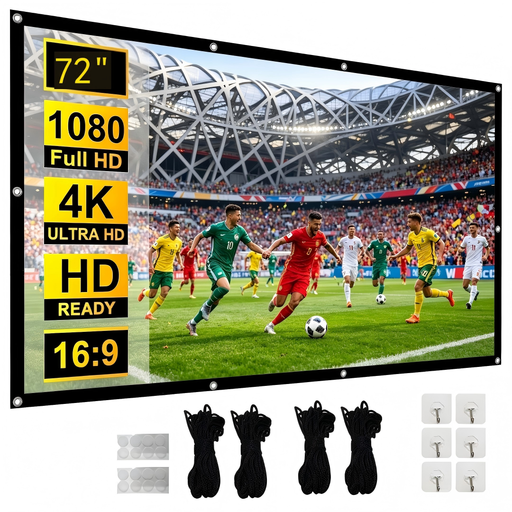
XBJ 72-inch, foldable 16:9 double-sided screen
Why it suits this profile: Its compact format fits easily in a living room or on a small terrace, making it a smart choice for a first outdoor cinema setup.
Its polyester screen is advertised as wrinkle-resistant and washable. The included ropes and hooks allow it to be tensioned more effectively than a screen that is simply hung up.
72-inch diagonal, 16:9 format, viewing angle advertised at up to 160° and front or rear projection.
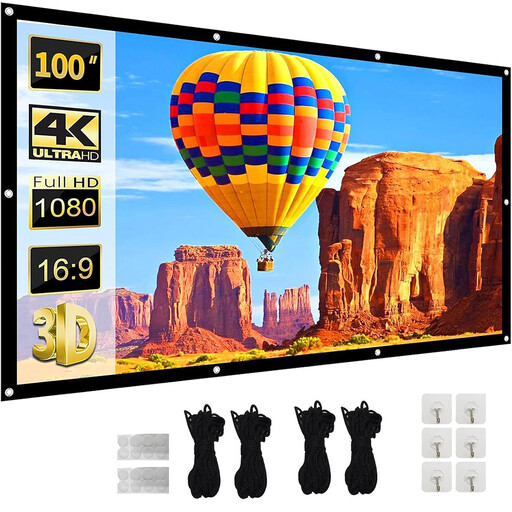
XBJ 100-inch, foldable indoor and outdoor screen
Why it suits this profile: This format works well for families and movie nights with several viewers, provided you have sufficient viewing distance.
Its foldable design makes storage straightforward. The attachment points and included ropes help minimise creasing caused by insufficient tension.
16:9 format, double-sided projection, advertised 160° viewing angle and suitability for home cinema, gaming and events.
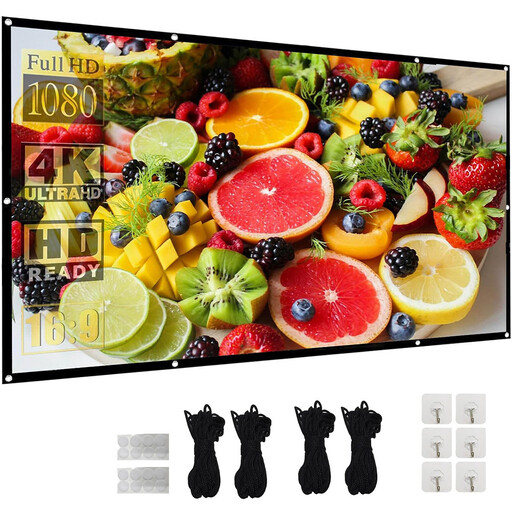
XBJ 120-inch, large-format projector screen
Why it suits this profile: Its expansive surface is well suited to associations, schools, offices and outdoor movie screenings for large audiences.
The extra-long ropes and included hooks allow it to be installed on various supports. However, the fixings should be reinforced, and the screening stopped as soon as the wind picks up.
120-inch diagonal, foldable screen, front and rear projection, 16:9 format and viewing angle advertised at up to 160°.
How to Set Up an Outdoor Cinema Screen with Ease
For a stable image, choose a flat area with minimal exposure to direct lighting. Measure the available width, then position the projector in line with the screen. Tension the ropes gradually to avoid distorting the screen.
Before every screening:
- check that the hooks are securely closed and each rope is properly fastened;
- check the stability of any trees, posts or walls being used;
- keep the screen away from flames, heaters and very hot light bulbs;
- keep ropes, hooks and packaging out of reach of young children;
- dismantle the screen in the event of rain, snow or strong gusts.
Running costs are generally limited to the electricity consumed by the projector. They mainly depend on its power consumption, the length of the screening and the tariff applied by your energy provider.
Frequently Asked Questions
Can a portable outdoor projector screen be used indoors?
Yes. A foldable screen can also be used in a living room, bedroom, meeting room or classroom. Simply check its dimensions when fully deployed and make sure you can secure it without damaging the walls.
How long can a projection screen last?
Its lifespan depends on how often it is folded, cleaning practices, UV exposure and storage conditions. To preserve the material, let it dry completely before folding it and store it in a dry place away from sharp objects.
Should you choose a 100-inch or 120-inch projector screen?
The 100-inch size is often suitable for a living room or medium-sized terrace. A 120-inch screen provides a more generous viewing surface but requires greater viewing distance, a wider support and more robust mounting. Your choice should therefore be based on the actual dimensions of your space rather than immersion claims alone.