
Portable Projection Screen: How to Choose a Practical Model for Home and Outdoor Use
A portable projection screen lets you easily turn a living room, garden or campsite into a cinema. It’s also great for sports broadcasts, presentations and gaming sessions. But you need to avoid the common pitfalls: a warped screen, an unstable setup, or dimensions that simply won’t fit in the room.
Before buying a foldable projector screen, watch out for these three traps:
- Relying only on the stated diagonal: a 100-inch projection screen needs enough viewing distance and plenty of clear space. In a small living room, a 72-inch screen will often be much easier to set up.
- Confusing crease resistance with being completely crease-free: a foldable screen is easy to transport, but the final result also depends on how you unfold, tension and store it.
- Overlooking outdoor stability: a lightweight screen acts like a sail. Without ropes, hooks, pegs or a properly secured stand, a single gust of wind can knock it over.
The Key Criteria Before You Buy
1. Format and Image Size
The 16:9 format is ideal for films, TV series, video games and sports events broadcast in high definition. It reduces black bars when the video source also uses this ratio.
Choose the diagonal to suit your space:
- 72 inches: an easy size to set up in a bedroom, living room or on a small patio;
- 100 inches: a good compromise for a family evening or an outdoor cinema session;
- 120 inches: a more immersive image, but it needs a larger wall, facade or clear area.
To make the right choice, measure the available width and check the distance between the projector and the screen. A large surface won’t make up for a projector placed too close or too far away.
2. The Screen Fabric and Crease Management
A fabric described as anti-crease or wrinkle-resistant is designed to cope with folding and transport while showing fewer visible marks than a standard fabric. That doesn’t mean it will stay perfectly taut in every situation.
Polyester, used on several XBJ models, offers practical benefits: it’s flexible, folds easily and can be cleaned according to the manufacturer’s instructions. To keep your screen in good condition:
- fold it without placing heavy objects on top;
- avoid abrasive surfaces and sharp objects;
- let the fabric relax before projecting if any marks have appeared;
- store it in a dry place, away from prolonged exposure to sunlight.
A double-sided screen can be used for front or rear projection. This feature comes in handy when the projector needs to be placed behind the screen, for example during a temporary setup in the garden.
3. Viewing Angle and Fixing
A stated viewing angle of 160° means several viewers can watch the image from the sides. However, the result also depends on the projector’s brightness, the ambient light and the screen’s tension.
For outdoor use, choose a solution that comes with ropes and hooks, or a screen with a tripod, pegs and a carry bag. Before each session, check:
- the sturdiness of the wall, tree or poles used as anchor points;
- that each rope and hook is properly secured;
- the stability of the tripod or pegs;
- that there is no strong wind, rain, or any flame or heat source nearby.
The mention “4K compatible” means the screen can be used with a 4K source. It won’t turn a Full HD projector into a 4K model: the final resolution depends on the projector and the content being played.
Which Setup Suits Your Needs?
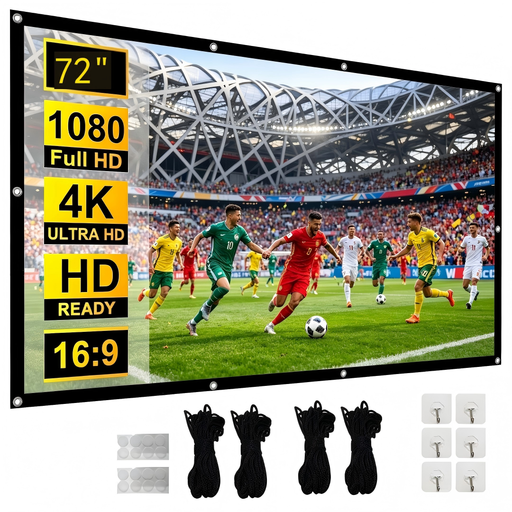
XBJ 72 Inch Projection Screen 16:9 Foldable and Anti-Crease
Why this choice suits this profile: Its 72-inch size is perfect for getting started, in a bedroom or small space. The fabric fits into a bag or suitcase, while the supplied ropes and hooks make temporary setups easy.
Its sensible diagonal keeps space requirements manageable, while the anti-wrinkle design and included fixing system tackle the common challenges of transport and assembly.
16:9 format, stated 160° viewing angle, double-sided projection and washable polyester fabric as per the instructions provided.
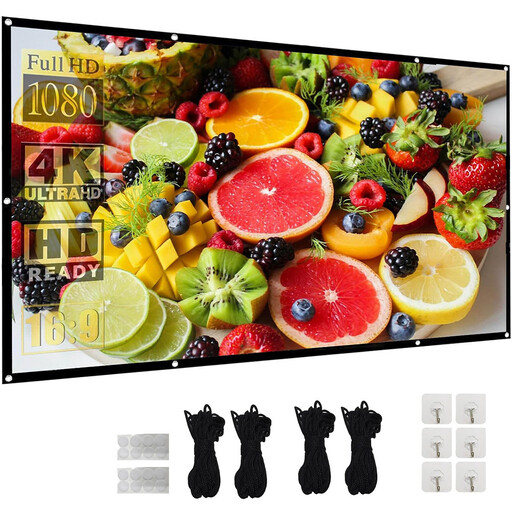
XBJ 120 Inch Projection Screen 16:9 Foldable, Anti-Crease and Double-Sided
Why this choice suits this profile: Its large surface area is aimed at users with a spacious living room, a dedicated room or an outdoor area that’s clear enough for a proper cinema screen.
The extra-long ropes and hooks let you adapt the fixing to different supports, provided you have a solid setup and favourable weather.
120-inch diagonal, 16:9 format, projection from both sides and a stated 160° viewing angle.
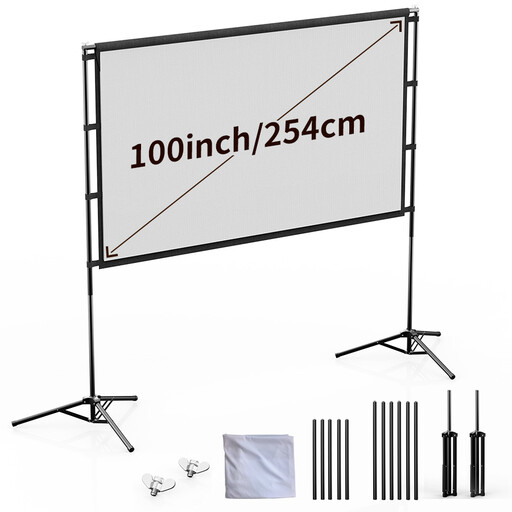
XBJ 100 Inch Portable Projection Screen with Tripod
Why this choice suits this profile: The tripod, four ropes, six pegs and carry bag meet the needs of sports evenings, camping and regular outdoor screenings.
The ballast and fixing elements reduce the risk of instability. However, the screen must be properly secured and then taken down in strong wind or bad weather.
100-inch surface, tripod, six pegs, four fixing ropes and carry bag included.
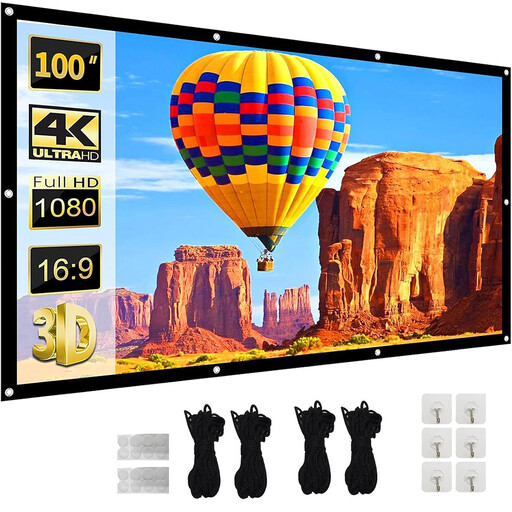
XBJ 100 Inch Projection Screen 16:9 Foldable, Anti-Crease and Double-Sided
Why this choice suits this profile: This versatile size works well in the living room, for presentations, video games and garden evenings, as long as you already have anchor points available.
The foldable design and double-sided projection make it easy to change location, while the supplied ropes and hooks speed up setup.
16:9 format, 100-inch surface, stated 160° viewing angle and stated compatibility with a 4K source.
Looking for other options?
We’ve put together a comprehensive list, updated in real time, of products that meet these strict selection criteria as well as European safety requirements.
Installing and Maintaining an Easy-to-Set-Up Projection Screen
For a uniform image, set up the screen on a flat surface or tension it evenly. Place the projector in line with the centre of the screen, then adjust the focus and keystone correction.
When outdoors, set everything up just before your session. Don’t leave the screen hanging in the rain, exposed to sunlight for long periods, or in strong wind. Also keep it away from flames, radiators and very hot projector bulbs. Ropes, hooks, pegs and packaging should be kept out of reach of children.
FAQ on Portable Projection Screens
How do I set up a portable projection screen without a wall?
Choose a model with a tripod or use ropes and hooks attached to stable anchor points. On soft ground, pegs can help improve stability. Check the screen’s tension and avoid setting it up when it’s very windy.
Can an anti-crease screen be stored folded?
Yes, if it’s designed to be folded. Fold it carefully, without placing heavy objects on top, then store it in a dry place. An anti-crease fabric reduces marks from transport, but careful unfolding is still essential to get a nice, even surface.
What size should I choose for outdoor projection?
A 72-inch projection screen is good for a small group and is easy to carry. A 100-inch model offers a more comfortable surface for watching a film or a match. The 120-inch format needs more viewing distance, a well-cleared space and particularly stable fixing.