
Pro Controller Guide: How to Choose a Durable Controller
For a gamer, a controller isn't just an accessory: it's an extension of their hand and their will in the game. Yet, the market is flooded with models making esports-grade promises that often hide frustrating design flaws. A joystick that starts to drift after a few months, poorly placed paddles, or spotty compatibility... these are all-too-common problems that quickly turn a good investment into a source of regret.
This guide is here to help you navigate the market. We'll break down misleading marketing claims and give you the keys to recognising a true pro controller—one that meets your expectations for performance and longevity, whether you're on PC, PS5, or Xbox.
The 3 Pitfalls to Avoid Before Buying a Pro Controller
Before you even start comparing spec sheets, you need to know how to spot the tell-tale signs. Because no, not all "pro" controllers are created equal, and many don't go the distance.
- The plague of "stick drift": a case of near-planned obsolescence. This is the most widespread problem. After a few hundred hours of gameplay, your character or cursor starts moving on its own. This phenomenon, known as stick drift, is often caused by the wear and tear of potentiometers, internal components that operate through physical contact. Any controller, even a premium-priced one, that relies on this traditional technology is almost guaranteed to develop this flaw.
- Purely cosmetic "pro" features. A controller with paddles or adjustable triggers isn't automatically superior. The pitfall lies in the quality of their implementation: low-grade plastic paddles, ergonomics that force an unnatural grip, or clunky configuration software can render these additions useless, or even counter-productive.
- Incomplete multi-platform compatibility. The "PC/Console Compatible" label is often just smoke and mirrors. It's not uncommon for a wireless gaming controller to work perfectly on a console but require a wired connection on PC, or for its advanced features (haptic feedback, audio passthrough) to be completely absent on one of the platforms.
The Essential Criteria for a High-Performance, Durable Controller
To make the right choice, focus on the features that truly matter for your controller's precision and lifespan.
Joystick Technology: Hall Effect, the Anti-Drift Solution
The major difference between a standard controller and an anti-drift controller lies in its stick technology.
- Potentiometers (standard): These use carbon tracks and mechanical wipers to detect movement. This constant contact leads to physical wear, which causes the infamous stick drift.
- Hall Effect Sensors: This technology uses magnets and magnetic sensors. There is no physical contact, and therefore no mechanical wear. A Hall effect Xbox controller or a pro PS5 model equipped with them will offer unwavering precision and a significantly longer lifespan. For a future-proof investment, this is a non-negotiable criterion.
Modularity and Customisation: A Real Competitive Edge
Customisation features are not just gimmicks if they're well-designed. Here's what to look for:
- Rear Paddles: They should be robust (ideally metal or high-density plastic), ergonomically positioned, and offer a crisp, responsive click. The ability to easily remap them via software or directly on the controller is essential.
- Adjustable Triggers (Trigger Stops): An indispensable feature for FPS games, allowing you to shorten the trigger's travel distance for faster shots. The best models offer multiple locking levels.
- Swappable Modules: Some controllers allow you to change the position of the D-pad and the left stick, or even replace the button cluster with a 6-button arcade stick-style module, ideal for fighting games.
Connectivity: Low Latency Above All Else
- Wired: Near-zero latency, this is the gold standard for competitive play and the esports controller.
- 2.4 GHz Wireless: Via a dedicated USB dongle, this connection provides ultra-low latency, which is indistinguishable from wired for the average user. It's the top choice for a wireless experience on a PC controller or console.
- Bluetooth: Convenient for its compatibility with numerous devices (smartphones, tablets), but it can introduce higher latency, making it less suitable for highly competitive gaming.
Our Top Pro Controller Picks
By applying these criteria of durability and performance, we've selected a few gems. Here are our recommendations, each tailored for a specific type of player.
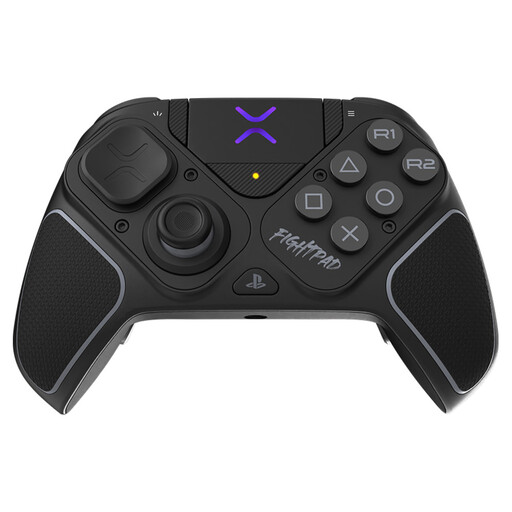
Turtle Beach Victrix Pro BFG Reloaded Wireless Modular Esport Controller - PS5/PC
Why It's the Right Choice: This player seeks ultimate versatility and long-term performance. They juggle between FPS and fighting games and demand a tool that adapts, without any compromise on responsiveness or durability.
Equipped with Hall effect sticks, it eradicates the risk of drift. Its modularity is not a gimmick: the 6-button fightpad module and programmable paddles are true performance tools.
Extreme modularity (sticks, D-pad, fight module). Clutch Triggers with 5 stopping points. Low-latency 2.4 GHz wireless and wired connectivity.
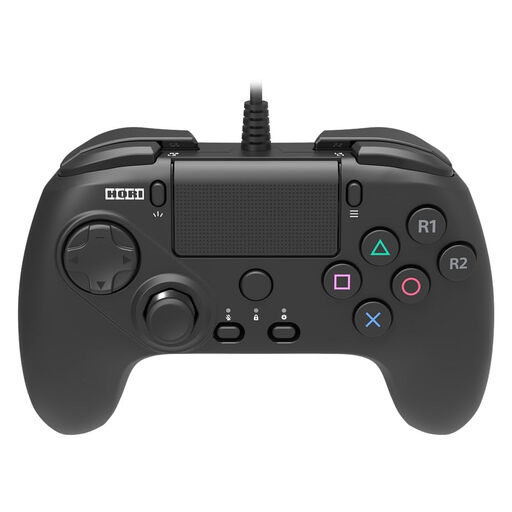
Hori Wired Controller Fighting Commander Octa - PC/PS4/PS5
Why It's the Right Choice: This player lives and breathes 2D and 3D fighting games. They need a 6-button face layout for direct access to all their moves, and pinpoint directional accuracy to pull off their most complex combos.
It doesn't try to be versatile; it's a specialist. Its design is built from the ground up for fighting games. Its high-quality micro-switch buttons ensure a click, responsiveness, and endurance far superior to standard membrane buttons.
6-button face layout. Short-throw analog stick with an octagonal gate for precise inputs. D-pad sensitivity is adjustable via the companion app.
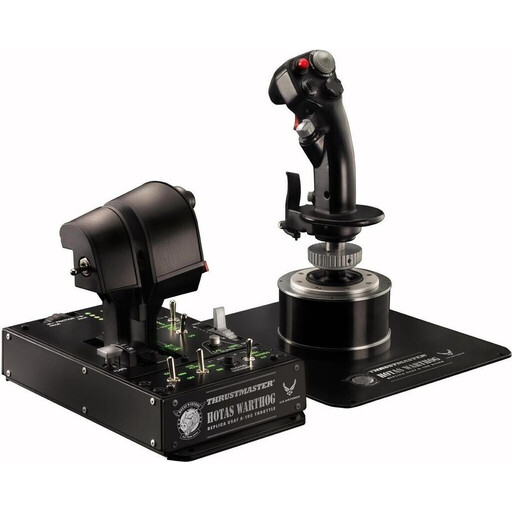
Thrustmaster Hotas Warthog - A-10C Official, Dual Throttle & Joystick
Why It's the Right Choice: This player is aiming for total immersion in flight simulators. For them, a simple gamepad is no longer enough. They need a complete, realistic, and indestructible control system (HOTAS) with surgical precision.
Built almost entirely of metal, its durability is rock-solid. It features H.E.A.R.T. (HallEffect AccuRate Technology) with its 16-bit contactless magnetic sensors, guaranteeing precision that never degrades.
1:1 scale replica of the A-10C aircraft's controls. Industrial-grade metal construction (over 6.5 kg). Extreme precision thanks to 16-bit magnetic sensors.
Looking for other options?
We've curated a complete, up-to-date selection of controllers that meet our criteria for excellence and durability.
Frequently Asked Questions (FAQ)
What exactly is "stick drift" and how can you avoid it?
It's that annoying phenomenon where your joysticks register movement inputs even when you're not touching them. The cause? The wear and tear of potentiometers, internal components that work by friction. Hall effect controllers solve the problem at its source by replacing this physical contact with a system of magnets and magnetic sensors. No contact means no wear, and therefore no stick drift. Precision remains intact over the long term.
Competitive Gaming: Can you really trust wireless?
Absolutely, but on one condition: you must choose the right technology. A wireless gaming controller with a 2.4 GHz connection (via a USB dongle) offers latency so low it's indistinguishable from a wired connection. This is the standard for esports. Bluetooth, while convenient, can introduce a slight delay and be more susceptible to interference, making it less reliable for hardcore competition.
Is software required to configure paddles and programmable buttons?
Yes, it's often essential. Most pro controllers come with software (on PC and sometimes on console) to configure everything: remapping buttons, adjusting stick and trigger sensitivity, creating per-game profiles, and updating the controller's firmware. It's the key to unlocking 100% of its potential.