
Probiotics 2026: how to choose a formula suited to your gut microbiome
Occasional bloating, irregular digestion, an unbalanced diet or simply a desire to care for your gut microbiome: probiotics appeal to many consumers in France. However, not all formulas address the same needs. Between “detox” claims, astronomical dosages and sugar-loaded chewable products, it is easy to pay for a composition that does not genuinely match your intended use.
The role of the Joybuy Product Recommendation Officer is to sort through marketing claims and highlight practical criteria: identified strains, CFU count, format, recommended age, storage conditions and dietary requirements.
Common pitfalls when buying probiotics
1. Assuming a higher CFU count means a more suitable formula
CFUs, or colony-forming units, refer to the quantity of live microorganisms declared per serving. A high number alone does not guarantee a formula that is better suited to your needs. You should also examine:
- the number of strains and their full names;
- the amount attributed to each strain;
- the product’s stability through its best-before date;
- the daily serving size actually recommended.
A formula displaying 60 or 77 billion CFUs may suit some adults. But if you are simply looking for a low-dose probiotic food supplement, that potency may mainly result in unnecessary expense.
2. Overlooking additional ingredients
Some products combine probiotics with prebiotics such as inulin, fructooligosaccharides or acacia fibre. These fibres serve as a substrate for bacteria, but tolerance varies from person to person. A probiotic and prebiotic combination therefore deserves close scrutiny, particularly when the digestive system is sensitive.
Formulas designed for women sometimes include cranberry, D-mannose or plant extracts. These ingredients are neither a guarantee of effectiveness nor a treatment. They simply reflect a targeted composition that should be assessed against your needs and priorities.
3. Choosing a format without checking the sugar content, age guidance or storage requirements
Probiotic gummies are convenient for people who dislike swallowing capsules, but they often contain glucose syrup, sugar or dextrose. Remember to check the daily serving size and the amount of sugar listed on the label.
For children, the minimum age and directions for use are essential. A product intended for adults should not be given to a child, even if the dosage appears moderate.
Criteria to check before choosing
Clearly identified strains
The term “probiotics” covers a wide range of bacteria and yeasts. A transparent product listing will generally specify the genus, species and, in some cases, the strain—for example, Lactobacillus rhamnosus or Bacillus coagulans. This level of detail makes it possible to compare products on a sound basis.
To support a balanced gut microbiome, do not focus solely on the number of strains. A formula made up of four clearly detailed strains may be easier to assess than a blend whose full composition remains unclear.
Dosage expressed per daily serving
Compare CFUs per daily serving, not per capsule or gummy. A formula may, for example, require two gummies to reach the stated dosage. This detail directly affects the daily cost and how long the bottle will last.
The products presented below list dosages of 1, 2, 60 or 77 billion CFUs, depending on the serving size. These figures describe the commercial formulation; they do not constitute medical advice.
A format that fits your daily routine
- Probiotic capsules: a discreet format, often sugar-free, that is easy to incorporate into a routine.
- Gummies: no water required and a fruity taste, with attention still needed for sugar content and texture.
- Delayed-release capsules: designed to delay the release of their contents, in accordance with the manufacturer’s instructions.
- Vegan formulas: check the capsule composition, the absence of gelatine and any other criteria that matter to you.
Claims such as “gluten-free,” “GMO-free” or “vegan” should be confirmed in the product listing and ingredient list. In the event of pregnancy, breastfeeding, medical treatment or a health condition, seek advice from a healthcare professional before taking any supplement.
2026 selection for different purchasing profiles

WeightWorld Probiotic 2Billion 90 Gummies
Why this choice suits this profile: a chewable, water-free format that is ideal for starting a daily routine. The bottle contains 90 gummies, providing 45 days of use based on the stated serving size.
The product listing specifies a serving of two gummies, a dosage of 2 billion CFUs of Bacillus coagulans and the presence of 100 mg of inulin. This allows you to compare the actual daily cost.
Vegan, gluten-free and GMO-free gummies with natural strawberry and vanilla flavours, to be stored below 25°C.

WeightWorld Bio Culture Complex 77Billion 60 Capsules
Why this choice suits this profile: this formula is aimed at adults seeking a detailed multi-strain composition, with 20 live cultures and a serving of two capsules per day.
The total dosage of 77 billion CFUs is stated per serving, with a breakdown of lactobacilli, bifidobacteria and other cultures.
Inulin and FOS, a vegan formula free from gluten and dairy products, and storage without refrigeration according to the product listing.

WeightWorld Women's Probiotics 90 Capsules
Why this choice suits this profile: its composition combines five strains, agave inulin, cranberry, hibiscus and sea buckthorn in a formula intended for adults.
The bottle recommends three capsules per day to reach 30 billion CFUs per serving. This helps you anticipate the actual duration of a 90-capsule bottle.
Delayed-release capsules, a vegan, gluten-free and GMO-free formula with no magnesium stearate, according to the product listing.
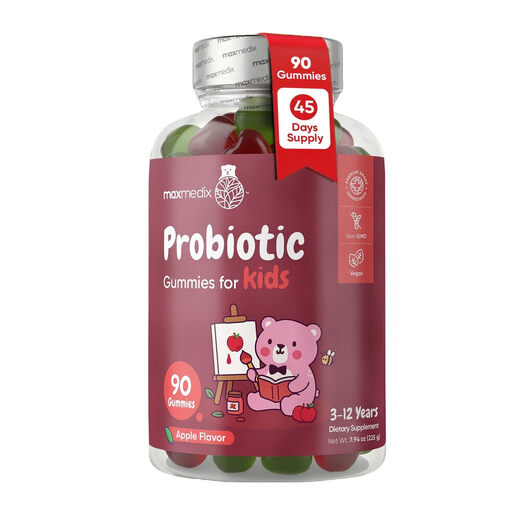
maxmedix Probiotics Gummies for Kids 90 Gummies
Why this choice suits this profile: this format is suitable for children aged 4 and over, with two gummies to chew under adult supervision, particularly to reduce the risk of choking.
The minimum age, dosage of 1 billion CFUs per serving and precautions for anyone undergoing treatment or with a health condition are clearly stated.
A Bacillus coagulans culture, a gelatine-free pectin base and a bottle of 90 gummies to be stored in a dry place below 25°C.
Looking for more options?
We have put together an updated selection of products meeting precise criteria for composition, format and consumer information in France.
Frequently asked questions about probiotics
How long should you take probiotics?
The duration depends on the formula and the guidance provided on the packaging. Some bottles cover 30 days, while others last 45 or 60 days. Before buying, check the number of daily servings and the total recommended duration of use. If digestive issues persist, worsen or are accompanied by unusual symptoms, consult a healthcare professional rather than continuing to self-supplement.
Do probiotics need to be refrigerated?
Not necessarily. Several products can be stored at room temperature in a dry place, away from heat and moisture. Others may require a lower temperature, particularly during periods of high heat. Always follow the label instructions and close the bottle securely after use.
Can probiotics and prebiotics be taken together?
Yes, some formulas already combine them with inulin, acacia or FOS. However, these fibres are not necessarily well tolerated by everyone. Follow the stated dosage and seek advice from a doctor or pharmacist if you are taking medication, are pregnant or breastfeeding, or have a diagnosed digestive condition.