
Which USB-C Laptop Charger Should You Choose? A Buyer’s Guide
The charger that came with your laptop is often bulky, proprietary, or has simply gone missing. Whether you need to replace a faulty adapter, get a second one for the office, or finally consolidate to a single power brick for all your devices, choosing the right USB-C laptop charger has become a real challenge. Faced with a jungle of wattages, standards, and technologies, it's easy to get lost.
This guide is here to provide clear benchmarks and help you find the perfect model by focusing on three pillars: compatibility, performance, and safety.
How to Choose a USB-C Power Adapter?
Before diving into our selection, let's review the three essential points to check to ensure you make the right choice.
1. Power (in Watts): The Key Criterion
Power, measured in watts (W), is the number one criterion. The golden rule: your new charger must deliver a wattage at least equal to that of your original adapter for your machine to operate and charge normally.
- For ultra-portable laptops (like MacBook Air, Dell XPS 13): a wattage of 45W to 65W is generally sufficient.
- For powerful laptops (like a fast charger for MacBook Pro, mobile workstations): opt for a 100W charger or more to ensure fast and efficient charging, even when the machine is under heavy load.
The risk of an underpowered charger? Painfully slow charging, or worse, seeing your battery drain even while your laptop is plugged in!
2. GaN Technology: Smaller, More Efficient
The acronym GaN stands for gallium nitride, a revolutionary semiconductor that is gradually replacing silicon in modern chargers. A GaN charger offers several major advantages:
- Compactness: At the same wattage, it is much smaller and lighter than a traditional charger.
- Energy Efficiency: It generates less heat, which reduces energy loss and enhances safety.
- Performance: This efficiency allows for multiple ports and high power output in a pocket-sized format.
3. The Number of Ports: One Charger for Everything
If you're often on the go or simply want to declutter your power strip, a multi-port USB-C charger is the ideal solution. It allows you to charge your computer, smartphone, and tablet simultaneously with a single power brick. However, pay attention to one crucial point: power distribution. When multiple devices are plugged in, the total wattage is split among the different ports.
Recommended USB-C Chargers
Here is our selection of the best models currently available, chosen for their technical specifications and real-world usability.
Apple 140W USB-C Power Adapter
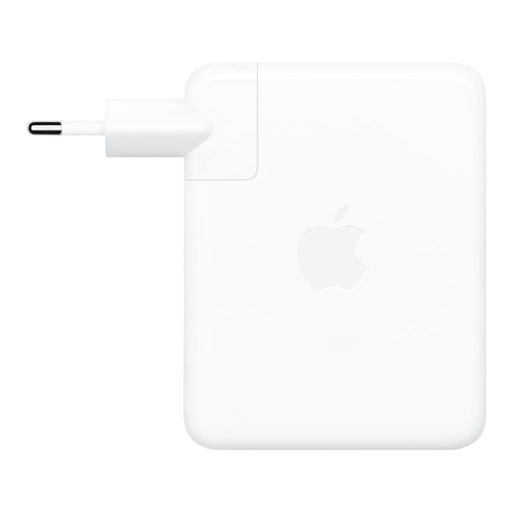
Why it stands out: It's the peace-of-mind choice for the Apple ecosystem. Designed by Apple, it guarantees perfect compatibility and optimal performance with the most demanding devices.
Key features:
- High Power: With its 140W, it's built to power the most powerful MacBook Pros without compromise.
- Fast Charging: Paired with a USB-C to MagSafe 3 cable, it can charge a 16-inch MacBook Pro (2021 or later) to 50% in about 30 minutes, according to Apple.
- Broad Compatibility: Although optimised for Macs, it remains fully compatible with any device that charges via USB-C.
Who is it for? Owners of a 16-inch MacBook Pro who want the Apple-recommended charging performance, whether to replace the original charger or to have a second one at the office.
Anker 736 Wall Charger (Nano II 100W)
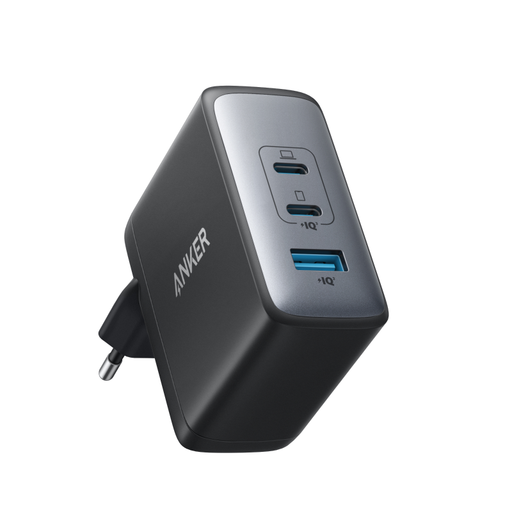
Why it stands out: It's the ultimate Swiss Army knife, offering a perfect balance of power, versatility, and compactness thanks to GaN II technology.
Key features:
- 100W of Power: Enough for the vast majority of USB-C laptops, including the most power-hungry models.
- Three Ports: With two USB-C ports and one USB-A port, it powers three devices at once. A perfect travel companion.
- GaN II Technology: Anker claims it's 34% more compact than an Apple 96W charger, making it incredibly easy to slip into a bag.
Who is it for? The mobile professional or user who wants a single power brick for their computer, phone, and headphones, without sacrificing speed or adding bulk.
Anker Atom II 3-Port 65W Charger
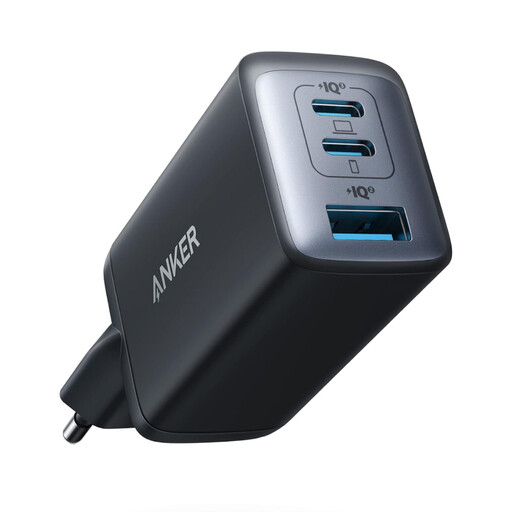
Why it stands out: This is the champion of compactness. Its size, barely larger than an AirPods Pro case, makes it an ultra-portable charging solution.
Key features:
- Ultra-portable: Its key advantage is its pocket-sized format, made possible by GaN II technology.
- 65W of Power: Perfect for full-speed charging of ultra-portable laptops like the 13-inch MacBook Pro or Dell XPS 13, as well as tablets and smartphones.
- Port Versatility: It features two USB-C ports and one USB-A port to power up to three devices, with intelligent power management.
Who is it for? Those for whom portability is the top priority. An excellent choice for traveling light, for a handbag, or as a backup charger that makes no compromises on performance.
Need a Different Type of Adapter?
A good charger is essential. But a complete setup sometimes requires other accessories. If your audio gear could also use an upgrade, check out our selection of Jack Adapters to connect all your devices.
Frequently Asked Questions About USB-C Laptop Chargers
What wattage should I choose for a laptop charger?
The golden rule: check the wattage (W) of your original charger and choose a replacement model with an equal or higher wattage. For an ultra-portable laptop, 65W is often enough. For a more powerful machine (gaming, creative work), aim for 100W or more to avoid performance throttling.
Can I use a phone charger for my laptop?
In a word: no. Most smartphone chargers do not deliver enough power (typically between 15W and 30W). At best, charging will be so slow that it won't even keep up with the power your laptop uses while running. At worst, nothing will happen at all. You must use a USB-C Power Delivery (PD) compatible charger with a wattage appropriate for your machine.
What are the advantages of a GaN charger?
To put it simply, a GaN charger (gallium nitride) is smaller, lighter, and more efficient than a traditional silicon-based charger. It generates less heat, which allows for the creation of chargers that are simultaneously very powerful, compact, and equipped with multiple ports. It's the technology of choice for digital nomads and anyone looking to lighten their bag.