
DJI Mic 3 Buying Guide: Is It Worth It and Common Pitfalls
For a content creator, audio quality isn't an option: it's a must. Clear, impactful sound can transform a mundane video into a captivating production. The wireless mic market is a jungle, making it easy to get lost in complex spec sheets and marketing promises. Our mission is to help you see things more clearly.
This guide puts the DJI Mic 3 wireless microphone—a benchmark for many videographers—under the microscope and gives you the keys to making an informed choice while sidestepping the most common mistakes.
The 3 Pitfalls to Avoid Before Choosing Your Wireless Mic
Before you even start comparing features, it's crucial to know the classic letdowns that can turn a good investment into a regret.
- Battery Life: An Often-Misleading Figure: Many brands advertise an impressive total battery life (over 20 hours), but this figure includes successive recharges from the case. In reality, a single transmitter's continuous recording time rarely exceeds 5 to 7 hours. For long sessions like using an interview microphone or for field reporting, this distinction is critical.
- The Myth of "Universal" Compatibility: A mic might be marketed as compatible with smartphones and cameras, while failing to mention that specific adapters are required... and sold separately. The result: unexpected costs and a real headache once you're out in the field.
- Noise Reduction That Distorts Your Voice: A good noise-cancelling microphone is essential for outdoor vlogging. The problem? Some entry-level systems apply such an aggressive filter that it distorts the voice, giving it a metallic, compressed sound. The goal is to filter out ambient noise, not to degrade the timbre of your voice.
The Game-Changing Technical Specs
To make the right choice, focus on these key points that guarantee the quality and versatility of your equipment.
32-bit Float Internal Recording: Your Safety Net
This feature, often reserved for a pro-grade recorder mic, is a game-changer. Unlike standard recording (16 or 24-bit), the 32-bit float format has such a wide dynamic range that it's nearly impossible to clip the audio (the infamous distortion that occurs during a shout or a sudden loud noise). In practical terms, even if your levels are set incorrectly, you can recover perfect audio in post-production. It's a lifeline for your audio takes, guaranteeing you'll never miss a thing.
Configuration: Single Kit or Dual Wireless Mic?
Your choice of kit depends on your primary use case.
- One Transmitter (1 TX): Ideal for a solo creator, a vlogger speaking to the camera, or for voice-overs.
- Two Transmitters (2 TX): Essential for interviews, two-person podcasts, or scenes with multiple speakers. A system like the DJI Mic 3 (2 TX + 1 RX) offers this flexibility, allowing you to capture two separate audio sources on a single receiver. It's the gold standard configuration for a wireless lavalier mic kit that aims to be versatile and professional.
Connection Quality and Noise Reduction
A good wireless system must ensure a stable connection, even in environments saturated with radio waves (Wi-Fi, Bluetooth). Technologies like dual-frequency transmission provide an effective shield against interference. Likewise, intelligent noise reduction, often AI-assisted, can isolate the human voice from ambient noise (wind, traffic) without degrading it. This is a decisive advantage for outdoor shoots.
Our Wireless Microphone Recommendations
Because every creator is unique, here is our selection tailored to different profiles, always with quality and reliability as the top priority.
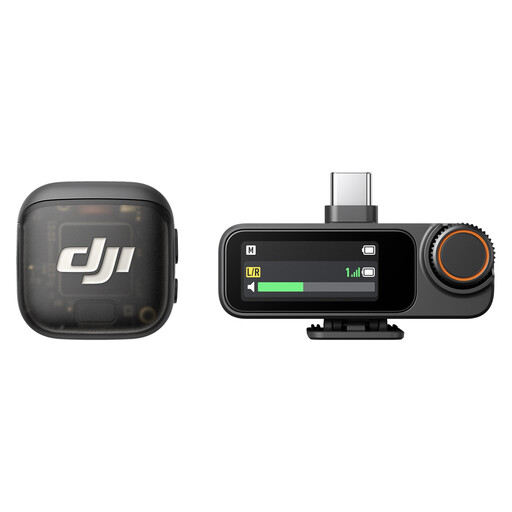
DJI Mic 3 (2 TX + 1 RX + Charging Case)
Why it's the right choice: Designed for videographers, journalists, and vloggers who demand rock-solid reliability. The two-transmitter kit is perfect for interviews and more ambitious shoots, offering a turnkey professional audio solution.
The 32-bit float internal recording is the ultimate safeguard against audio clipping. The kit comes complete with its charging case, putting an end to battery anxiety.
Ready-to-use dual wireless mic system. Premium build quality and integration with the DJI ecosystem. Intelligent noise reduction that preserves vocal timbre.
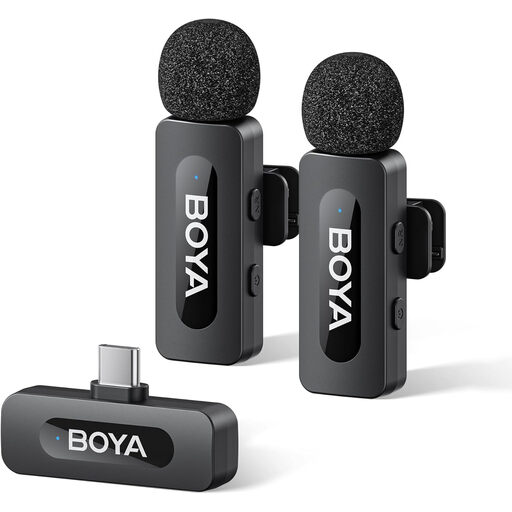
BOYA BY-V20 V2.0 USB-C Wireless Microphone (2 TX+1 RX)
Why it's the right choice: Perfect for creators on Android or iPhone (USB-C models) looking for a dual-mic system for interviews or vlogs without breaking the bank.
This kit bypasses the compatibility trap with its receiver that plugs directly into a USB-C port, no adapter needed. It offers a complete dual-mic solution, whereas competitors in this price range often provide only a single transmitter.
Direct connection to your smartphone. A very affordable dual wireless mic system. One-click noise reduction for instant, easy use.
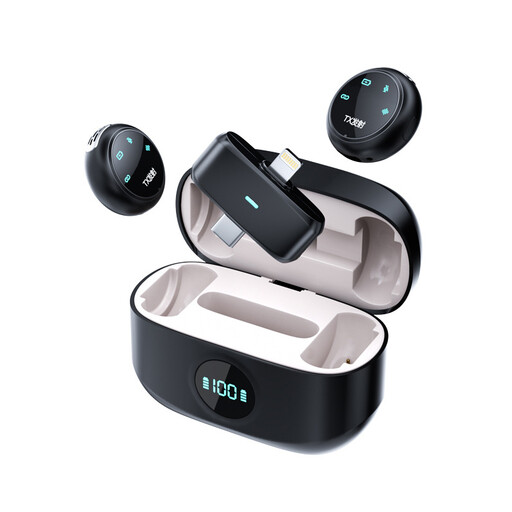
Verbex K31Pro-Black dual mini microphone
Why it's the right choice: Ideal for getting started with streaming or short-form videos (Reels, TikTok). The magnetic clip is ultra-convenient for instant setup, and its dual connector makes it compatible with most devices.
An all-in-one solution with its charging case, which immediately solves the problem of battery life and needing to buy extra accessories. Its hybrid connector (Lightning/USB-C) ends the compatibility headache.
Clever magnetic clip. Included charging case for excellent on-the-go battery life. A dual-mic solution at an unbeatable price.
Can't Find What You're Looking For?
We've analyzed dozens of other models. Discover our full selection of microphones that meet our strictest quality criteria.
Frequently Asked Questions (FAQ)
1. Can you connect the DJI Mic 3 to a smartphone without using the receiver? Yes, the DJI Mic series allows for a direct Bluetooth connection to certain devices in the DJI ecosystem (Osmo Pocket 3, Osmo Action 4) without the receiver. However, for a standard smartphone, using the receiver with the appropriate adapter (USB-C or Lightning) remains the best solution to ensure optimal stability and audio quality.
2. What is the practical difference between 24-bit and 32-bit float recording? Imagine you're recording a conversation and someone suddenly shouts. In 24-bit, if the sound is too loud, it will clip: the audio is permanently ruined by distortion. With 32-bit float, the dynamic range is so vast that even this sound spike can be brought back to a normal volume in post-production without any loss of quality. It's a real safety net for shoots where anything can happen.
3. Is the DJI Mic 3 (2 TX + 1 RX) kit relevant if I mostly film alone? Absolutely. Even for a solo creator, this kit offers invaluable flexibility. You can use one transmitter for your vlogs and keep the second as a backup, always charged in the case. It can also be used to capture ambient sound on a separate track, or be ready for an unplanned interview. It's a smart investment for the future of your content.